

If you have ever visited Japan, you probably know that we are quite mellow people.
Those dead quiet trains make us look well-behaved and civilised.
Yet, when it comes to festivities, we go overboard and know how to celebrate (not in the Latin American, Spanish, or Italian ways, but hey…).
Celebrations have kept Japanese civilisation going since time immemorial.
You may have heard of a festival called Onbashira Festival (御柱祭) where 16 fir trees (16-19 metre-long each) are pulled downhill by a group of people.
Every year, many people get injured and sometimes even die… but they still keep going regardless as festivals are crucial in Japanese life.
According to Kunio Yanagita (1875-1962), a renowned scholar and folklorist, all our activities can be divided into two categories: Ke (け; 褻) and Hare (はれ; 晴れ; 霽れ).
Ke refers to the ordinary.
Things or activities that you do every day like family life, work, school, etc.
Hare, on the other hand, refers to things and activities that are out of the ordinary such as festivals and rituals like wedding, coming of age, and Shichi-Go-San.
It is the balance between these two kinds of activities that have maintained Japanese life.
Even though many people assume that ke is from the word kegare (impurities), but this is not the case.
The concept of kegare was only added in the 1970’s to this hare-and-ke dichotomy.
Working hard on the ordinary (ke) and looking forward to the out-of-the-ordinary (hare) is how Japanese have coped with our rather stressful social life.
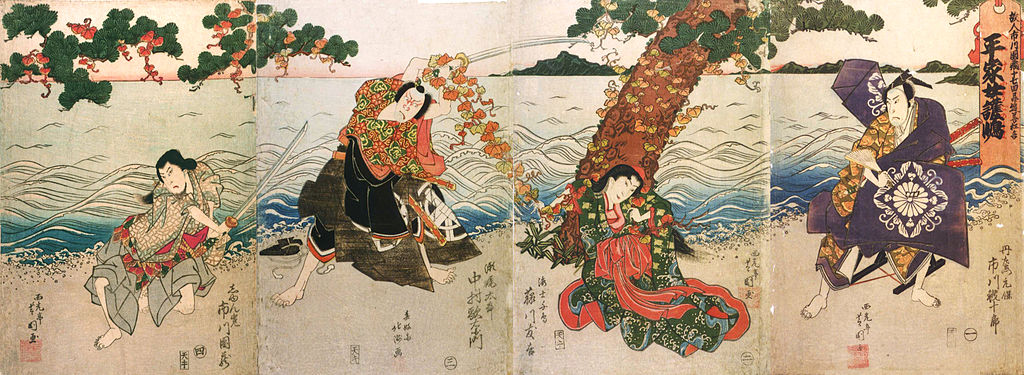
Photo Credit
Si-take. at Japanese Wikipedia, CC BY-SA 3.0 https://creativecommons.org/licenses/by-sa/3.0, via Wikimedia Commons
Reference




 English Rakugo NZ