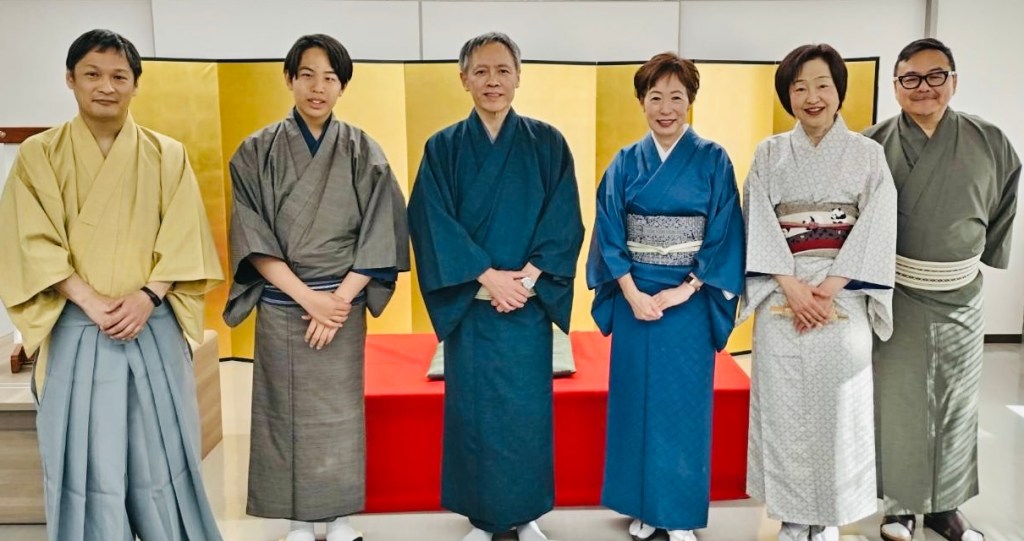
Performing Rakugo on Saturday 7 September!

I’m letting you know that my rakugo performance at Te Pou Theatre is happening this weekend!

Some people have asked me what time my slot is, so here you go!

PLACE: Tāhū Studio at Te Pou (Corban Estate Arts Centre, 2 Mt Lebanon Lane, Henderson, Waitakere)

TIME (for my performance): 2:15PM-2:45PM

As I mentioned before, it’s a part of Whānau Day, and you can check out heaps of other amazing artists, too, FOR FREE!

Hope to see you there, and make sure to say hi to me!

Rakugo Performance Schedule

Kia ora!

It’s been a while to update my website, but hope everything is well with you all 😊

I have been performing mainly for educational institutions for the last few months, but 2 public performances are coming up very soon!

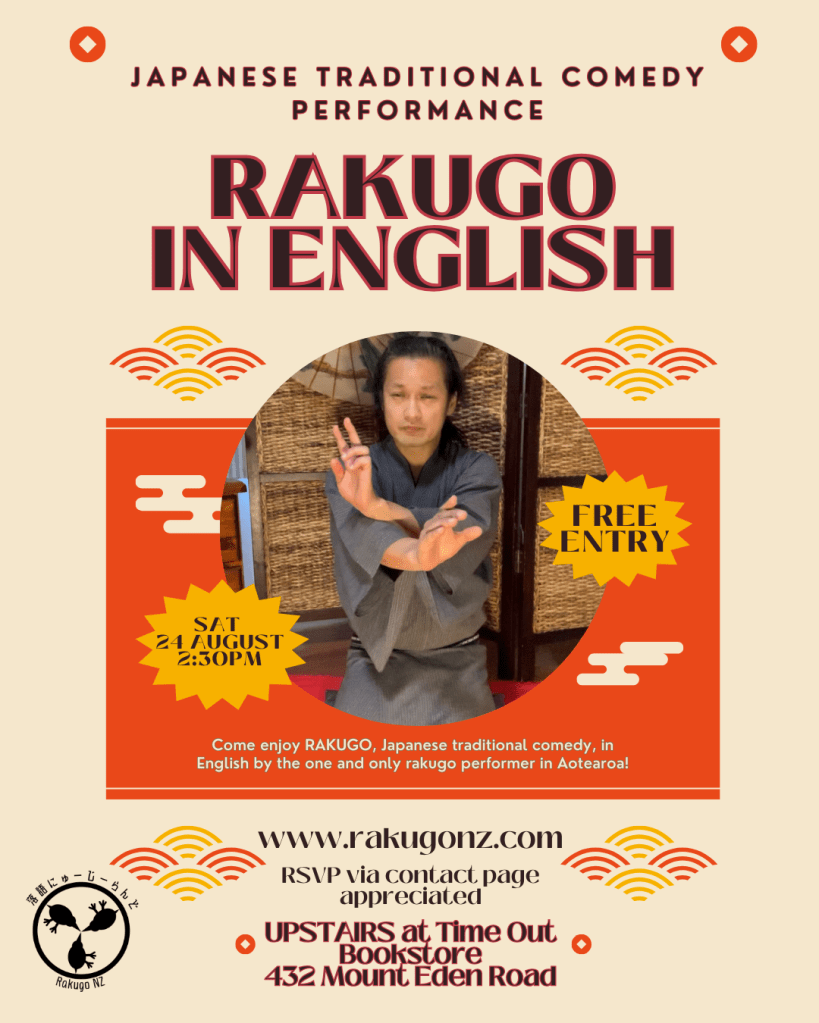
One will be at UPSTAIRS of my favourite bookstore, Time Out (432 Mt Eden Road), and the other will be on Whānau Day 2024 at the prestigious Māori theatre, Te Pou (2 Mt Lebanon lane, Henderson)!

* To clarify the notice on Whānau Day 2024, ‘Rakugo’ is the right spelling of my art, and my real name ‘Hiroshi’, instead of my stage name Kanariya Eishi, is shown (which is actually seen as a no-no in the rakugo world), but I’m still super grateful!

Please do RSVP via contact page or one of my SNS if you are coming to the Time Out performance. RSVP not required for Whānau Day.

I normally pick which stories to perform while I’m on stage, but I have realised it’d be more audience friendly if I let them know before the performance, so here’s my plan:

Time Out (Sat 24 August)

Story 1: The Zoo (動物園) Story 2: Licking a Kettle (やかんなめ)

Te Pou (Sat 7 September)

Story 1: Jugemu (寿限無) Story 2: The Zoo (動物園)

Hope to see you there! Don’t forget to RSVP if you are coming to Time Out!

Social Media Dilemma

It’s been 8 months since I closed my Twitter/ X account.

The platform was getting filled up with hate speech, misinformation, and trolls, and I no longer wanted to be a cog for the billionaire’s virtual playground where I was one of his products.

But… I have to admit that I later regretted my decision when my account was completely swiped off the system. I really felt, then, that regardless of all the cons, what mattered the most was the real people on the other side of the digital sinkhole.

I almost felt guilty that I chose my dislike of the platform over the real people who I knew in real life and those who I’d possibly meet in the unforeseen future.

Having said that, it’s time to move on.

The problem with X was that a single powerful person (or an egomaniac?) dominated the entire platform. Unfortunately, this could potentially happen to all other centralised platforms including Meta-owned sites like Facebook, Instagram, Threads, or even WhatsApp, which means pretty much all the major platforms in the world.

However, as a true “indie of indies”, I cannot do without SNS to share my work as a rakugo performer, and this has been a huge dilemma to me.

In an ideal world, I’d rather meet and chat with people face-to-face rather than only connecting with them virtually. But I’ve been told by my producer and actor friends that I must keep at least one major platform, which according to them is Instagram, Facebook, or X. In fact, one of the recent contracts that I signed said, I have an obligation to share the event that I’m involved in at least 3 times via my SNS, so I literally can’t get rid of them 😁

Then, enters the Fediverse concept.

I don’t fully understand it, but it’s basically a collection of social networking sites that can communicate with each other, therefore not bound by one single individual or company unlike other platforms.

In Fediverse, you can move around between platforms. So even if you close down your current account, you can take it with you to another platform.

WordPress, Mastodon, and Bluesky probably are the most famous ones, but recently Threads (half-) entered the Fediverse.

It seems like some instances (or servers) have rejected to connect with Meta-owned Threads as it might interfere with their internet freedom. I don’t really know enough about the consequences of their participation, but we’ll see.

But for now, to look ahead for the future, it’d make sense for me to stick with platforms in the Fediverse.

You are most likely to find my latest news and thoughts on Mastodon and Threads… for the time being.

Superstitious Japanese: Luckiest Days of the Year

I have to say that Japanese are superstitious.

I have a large stack of the lucky charms that my dear mother in Japan have sent me over the last 20 plus years.

We avoid numbers like 4 and 9 because 4 (四 shi) rhymes with death (死 shi) while 9 (九 ku) rhymes with suffering (苦 ku).

When I turned 44, my mum sent me heaps of lucky charms to ward off bad luck. I can predict that I’ll be bombarded with some more lucky charms when I turn 49 next year.

Having said that, I grew up more of a cynical sceptic, taking after my dad.

So I thought, but I recently realised that I am actually both sceptic and superstitious- just like the rest of Japan.

Most of us say that we are non-religious, but we love visiting shrines, temples, and even churches and vaguely believe in the unseen world. We are not atheists as some westerners say.

Since I started learning about the traditional Māori calendar called maramataka, I’ve got really curious about our own traditional calendar, and I’ve been learning about it for the last few months.

First, look at the Japanese calendar of this month (June 2024) below. Most of our calendars tell us the luck of each day.

For example, 24th June 2024 is a Taian (大安), one of the luckiest days, and many Japanese weddings are held on a Taian.

On the other hand, 17th June 2024 is a Butsumetsu (仏滅), and it’s the unluckiest day in Japanese calendar. Most couples avoid this day to get married.

As I grew up, I’d always thought Taian was the luckiest day, but I have recently learned that there are luckier days in the year.

It is called Tenshanichi (天赦日 てんしゃにち), which only happens 5-6 times a year. It is believed that all the gods rise up to the heavens and forgive all the sins of people on this day.

When Taian and Tenshanichi overlap, it is even more auspicious.

There is another lucky day called Ichiryumanbaibi (一粒万倍日 いちりゅうまんばいび), which literally means “the day one seed turns into 10,000 seeds”.

It is a good day to start a new project.

Why Fishers in Oiso Do Not Catch Octopuses?

As I promised in the previous post, here is a very fascinating folklore from my hometown, Oiso.

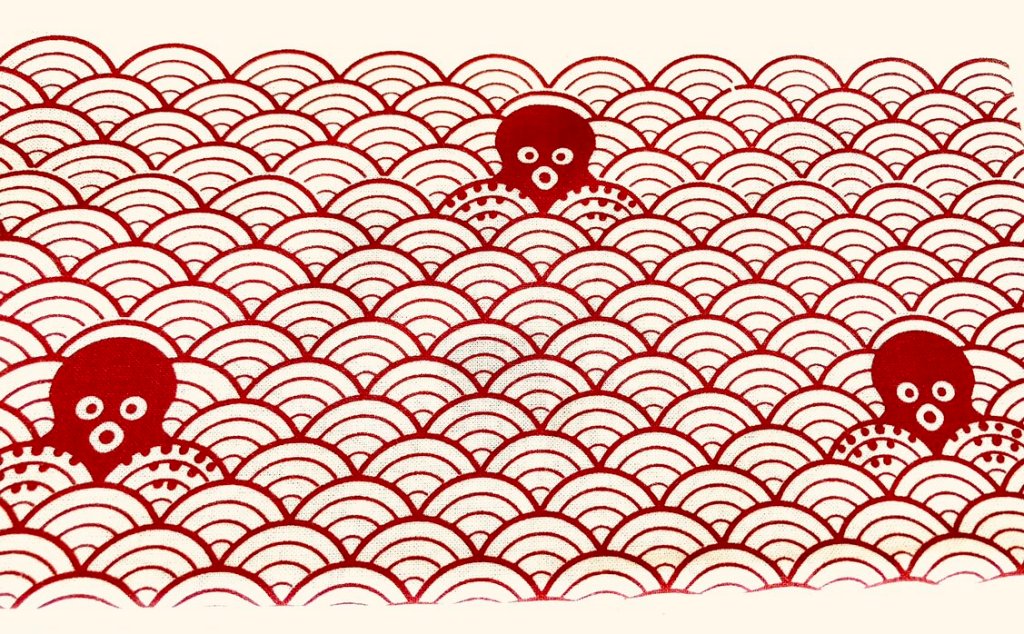
In Oiso, fishers traditionally do not catch octopuses, and this is a folklore that explains why:

During the reign of Emperor Ōjin (270- 310), there lived a fisherman called Takonojo (蛸之丞; たこのじょう). Tako, by the way, means an octopus.

One day, when he was fishing as usual, he saw something glittering, drifting in the waves.

Lo and behold, it was a small octopus, and it began approaching Takanojo’s fishing boat!

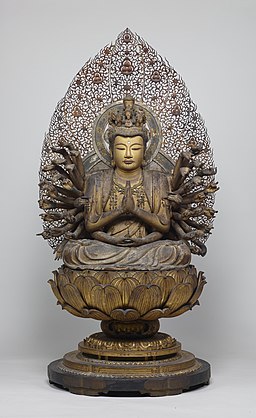
The octopus crawled up onto his boat and suddenly began transforming into a shining statue of a Thousand-Armed Kannon (千手観音), which is said to be a manifestation of the Buddha’s compassion.

This is not the actual statue, but here is an example of a Senju Kannon. This Kannon is from the 14th century (Nanbokucho period/ early Muromachi period) and owned by the Tokyo National Museum.

This statue was first enshrined at Koma Temple (高麗寺) but moved to Keikakuin Temple.

Because of this legend, real Oiso fishers do not catch octopuses.

What puzzles me, though, is that Buddhism reached Japan in 538AD, which was well after this miraculous incident happened in my hometown.

Anyhow, no octopus carpaccio for us Oiso-ites 😁

Photo Credits

Senju Kannon

Tokyo National Museum, CC BY 4.0 https://creativecommons.org/licenses/by/4.0, via Wikimedia Commons

Home Sweet Home Oiso No.1

It’s 4:30AM.

Someone is making loud scraping noise right outside of our bedroom.

I peek through the curtains…

It’s a surfer, busily applying wax on his surfboard.

Then, I realise- I’m back home in Oiso!

My hometown, which is located 70km to the west of Tokyo, perhaps is one of the Top 10 destinations for the Japanese surfers.

The number of surfers per capita is abnormally high, and in summer the main beach literally gets filled with local and visiting surfers. It’s like the Shibuya Station crossing if you know what I mean.

Naturally, the town is full of the outdoor types, hippies, creatives and plain weirdos (like myself).

It’s a historical town, too, that once hosted 2 ex-Japanese Prime Ministers and 6 other PM’s who had their holiday homes there.

Some of you history-buffs may know that it was one of The Fifty-three Stations of the Tōkaidō during the Edo Period (1603-1867).

The Japanese literary giant, Toson Shimazaki, lived in Oiso, too, and Haruki Murakami still has one of his houses there (he’s rich).

I realised that I am describing it like a utopia, but it’s really a sleepy little town with a population of around 30,000 people. Most Japanese would just bypass right through unless they are surfers or history fans.

But to me this is my home, and I have a lot to talk about!

In the next few blog entries, I will be sharing about this town that only the locals know, including its local legends and folklores.

My back and shoulder are not doing great at the moment, so I’ll stop here for now.

See you next time!