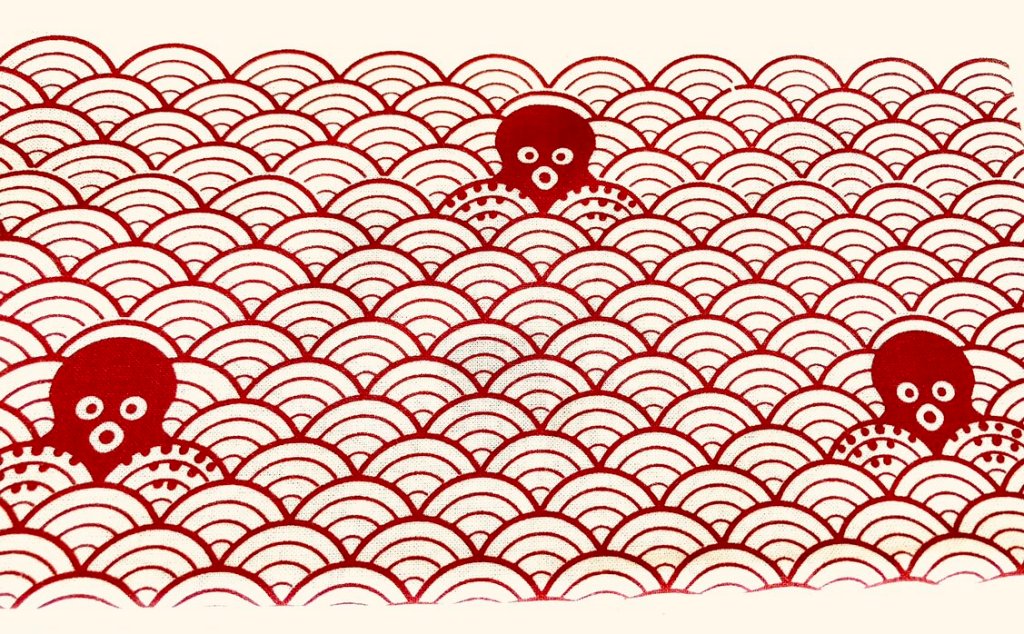
Why Fishers in Oiso Do Not Catch Octopuses?

As I promised in the previous post, here is a very fascinating folklore from my hometown, Oiso.

In Oiso, fishers traditionally do not catch octopuses, and this is a folklore that explains why:

During the reign of Emperor Ōjin (270- 310), there lived a fisherman called Takonojo (蛸之丞; たこのじょう). Tako, by the way, means an octopus.

One day, when he was fishing as usual, he saw something glittering, drifting in the waves.

Lo and behold, it was a small octopus, and it began approaching Takanojo’s fishing boat!

The octopus crawled up onto his boat and suddenly began transforming into a shining statue of a Thousand-Armed Kannon (千手観音), which is said to be a manifestation of the Buddha’s compassion.
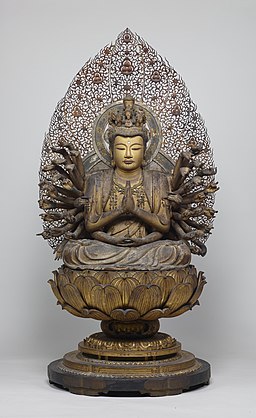
This is not the actual statue, but here is an example of a Senju Kannon. This Kannon is from the 14th century (Nanbokucho period/ early Muromachi period) and owned by the Tokyo National Museum.

This statue was first enshrined at Koma Temple (高麗寺) but moved to Keikakuin Temple.

Because of this legend, real Oiso fishers do not catch octopuses.

What puzzles me, though, is that Buddhism reached Japan in 538AD, which was well after this miraculous incident happened in my hometown.

Anyhow, no octopus carpaccio for us Oiso-ites 😁

Photo Credits

Senju Kannon

Tokyo National Museum, CC BY 4.0 https://creativecommons.org/licenses/by/4.0, via Wikimedia Commons

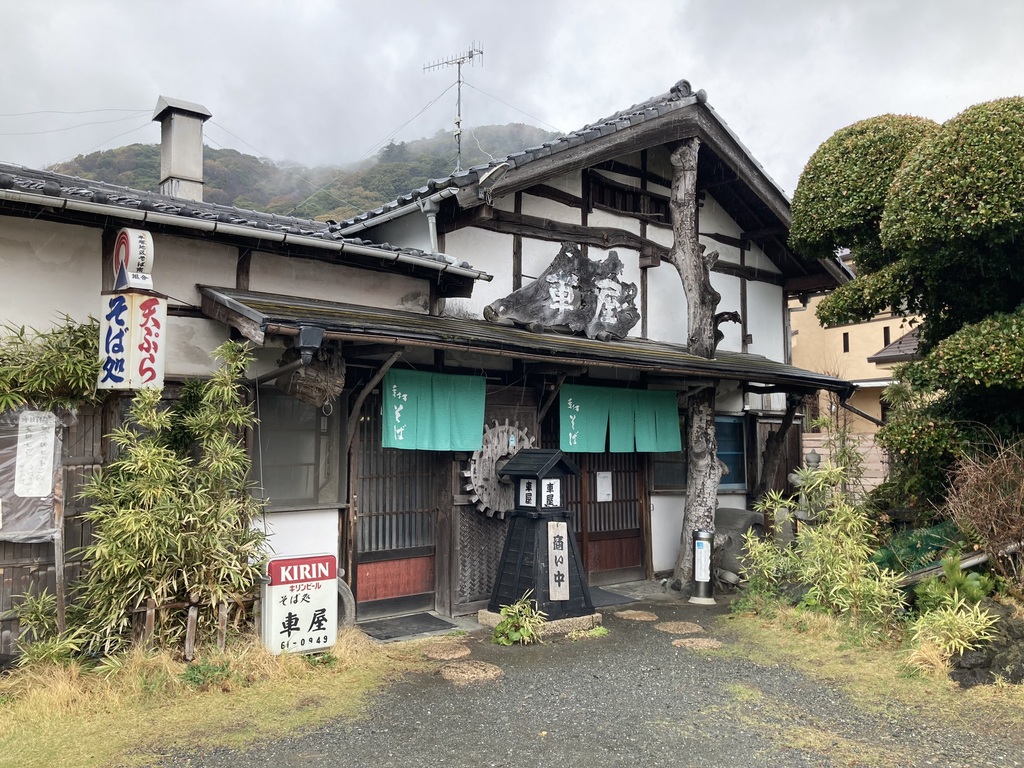
Home Sweet Home Oiso No.1

It’s 4:30AM.

Someone is making loud scraping noise right outside of our bedroom.

I peek through the curtains…

It’s a surfer, busily applying wax on his surfboard.

Then, I realise- I’m back home in Oiso!

My hometown, which is located 70km to the west of Tokyo, perhaps is one of the Top 10 destinations for the Japanese surfers.

The number of surfers per capita is abnormally high, and in summer the main beach literally gets filled with local and visiting surfers. It’s like the Shibuya Station crossing if you know what I mean.

Naturally, the town is full of the outdoor types, hippies, creatives and plain weirdos (like myself).

It’s a historical town, too, that once hosted 2 ex-Japanese Prime Ministers and 6 other PM’s who had their holiday homes there.

Some of you history-buffs may know that it was one of The Fifty-three Stations of the Tōkaidō during the Edo Period (1603-1867).

The Japanese literary giant, Toson Shimazaki, lived in Oiso, too, and Haruki Murakami still has one of his houses there (he’s rich).

I realised that I am describing it like a utopia, but it’s really a sleepy little town with a population of around 30,000 people. Most Japanese would just bypass right through unless they are surfers or history fans.

But to me this is my home, and I have a lot to talk about!

In the next few blog entries, I will be sharing about this town that only the locals know, including its local legends and folklores.

My back and shoulder are not doing great at the moment, so I’ll stop here for now.

See you next time!

Online Rakugo Project Starting Next Week!

As some of you may know, I spent the last two months recovering from a major-ish disc injury.

I am not writing this to get your sympathy, but I am just telling you why my “Online Rakugo Project” did not happen for so long.

Having said that, I am glad to announce that I have finally filmed two of my rakugo stories, and I will start posting them from next week!

In this Creative New Zealand funded project, I will post 10 very different rakugo stories on my online platforms, mainly YouTube and possibly Vimeo and IGTV.

If you still haven’t, please follow my YouTube channel as it will be an incentive for me to keep posting videos after this project is over. Please share about it with your friends and family as well.

I was initially not too sure whether to post videos as it is a consensus among rakugo fans that rakugo would not work in the video format. It is much more suited for the audio media.

Also, it would inevitably expose my limited skills and make it open to criticisms from rakugo purists (please be easy on me!), but I decided to post them for the following reasons:

  • I have been requested by quite a few people over the last few years. If that’s what my supporters want, I will provide! I perform rakugo for those people, not for critics 😃
  • As the world faces the Covid crisis, I want to cheer up people through my project, even if it is for a slightly bemused chuckle. Throughout my childhood, my peers always told me I had a “bored-sounding voice” (つまらなそうな声) but had a funny face. I probably should make the most of my “gifted” face.
  • It will be a good record of how primitive my skills were, looking back 10 years from now.

Finally, I was torn whether to have a small live audience for recordings or not. It is now possible to have an audience in NZ, and it is so much easier to perform in front of one. But I decided to talk straight to the camera instead, in solidarity with people in countries that are still majorly affected by the virus.

The first story “Chotan” is a little unusual pick to kick off the project with, but I couldn’t resist as I like performing quirky stories. It is translated as “Long-Tempered vs. Short-Tempered”, and it is a story about two best friends, one being extremely laidback, the other being quick-tempered. Hope you will enjoy it!

I will post it sometime next week!