Surprisingly Elegant, Narita

『奥様が座席から落ちないよう、奥様のシートベルトをしっかりとお締めください。』
“Okusamaga zasekikara ochinaiyou, okusamano seatbelt wo shikkarito oshimekudasai.”

…was the inflight announcement by a Kiwi cabin crew, who was excellent at Japanese.

His Japanese was literally perfect… except for one word.

In Japanese, “okusama” is a wife, and “okosama” is a child, so instead of saying, “Please fasten your child’s seatbelt so that they do not fall off their seats,” he encouraged us to fasten our wives’ seatbelts- which I did.

Completely unrelated reminiscence from the flight, but yes… Narita!

As you know, Narita International Airport is Japan’s main international airport, and it’s often referred as “Tokyo/ Narita Airport” because its original name was “New Tokyo International Airport”.

This is such a deceptive marketing.

The airport is NOT in Tokyo… AT ALL.

It is in Chiba Prefecture and takes about 80 minutes by an express train to get to Central Tokyo.

It takes at least 3hrs to travel to my hometown in Kanagawa Prefecture.

Before children, we used to travel straight to my hometown after the 11hr flight from New Zealand, but this is not realistic anymore.

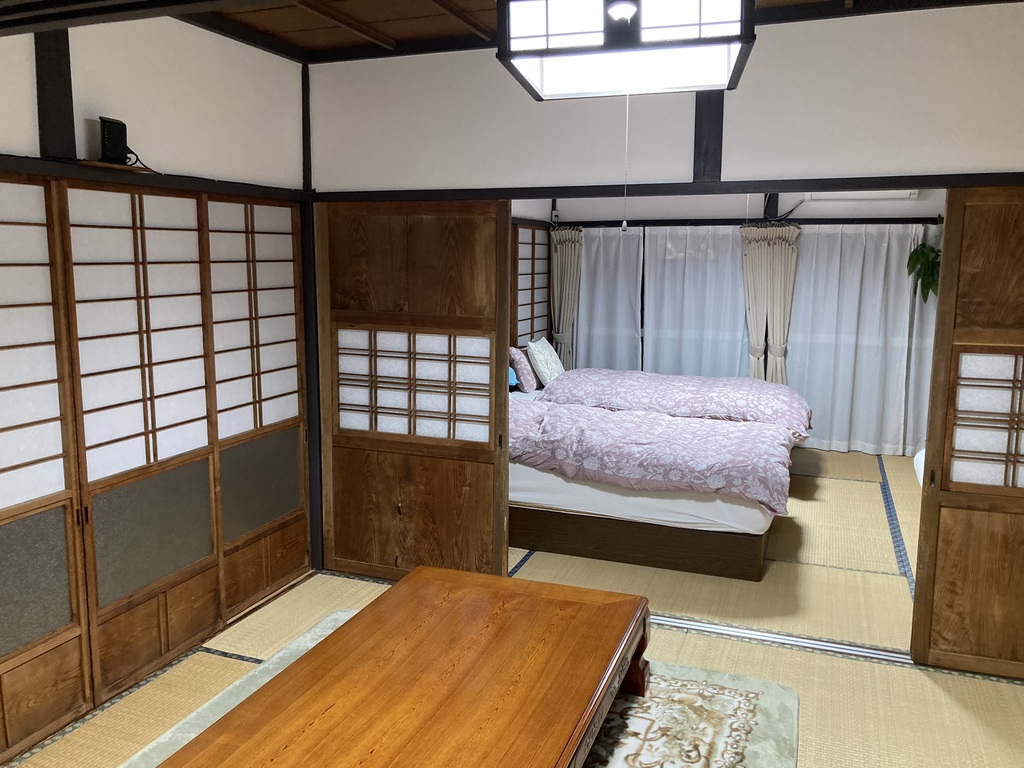
So… we decided to stay at an accommodation nearby for the night to be refreshed before the train journey to my hometown the next day.

This place was only 1.5km from the airport, and the friendly hosts even came to pick us up at the airport!

They have 5-star reviews from over 279 reviewers as of today- no wonder their service was excellent!

But what surprised me the most was how quiet this entire suburb was.

Unlike my preconception, it was very rural and spacious. I couldn’t believe the airport was less than 2km away!

As I explored the community, I realised that this area was full of history. I just hadn’t realised this as I’d always bypassed right through this area to go overseas/ home before this.

The host told me a lot of stories about the Narita area, and now I’m planning to explore properly next time.

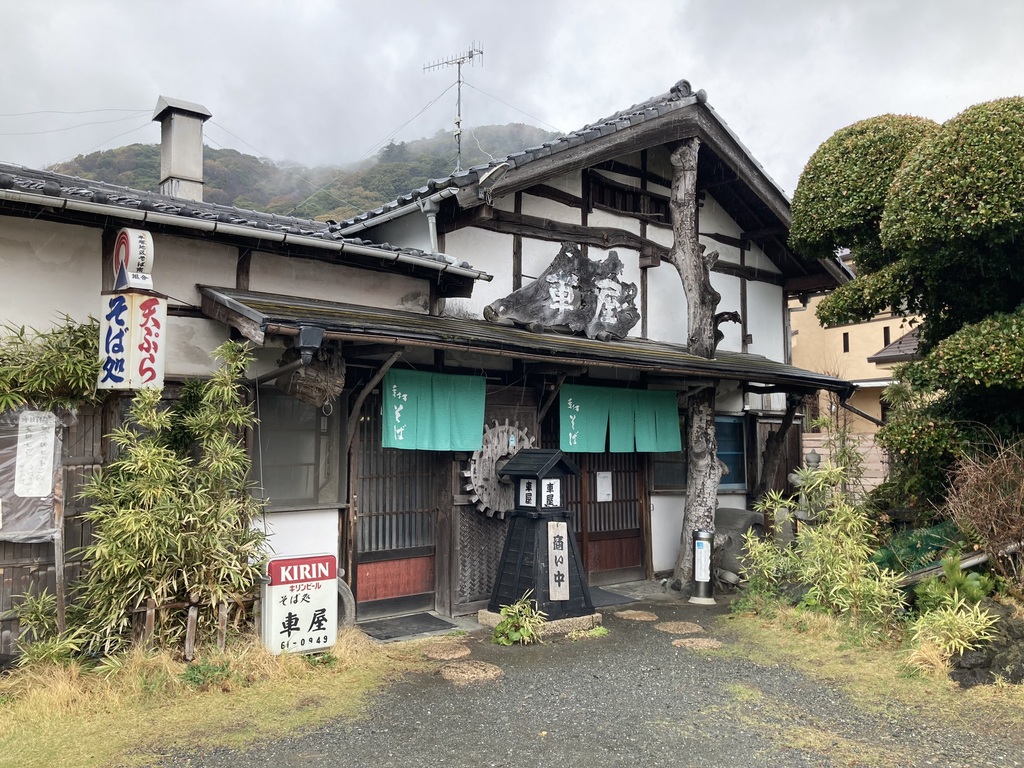
During the morning walk, we discovered a historical farmhouse nearby that had belonged to an American farmer in the Meiji period (1868- 1912) then to the Imperial family. The exterior of the house can be seen in the photo above.

You can probably see that both the Japanese and the western elements are mingling together in the design of the house. We describe this sort of cultural remix as “Wa-Yo-Set-Chu” (わようせっちゅう 和洋折衷).

Perhaps, I’m a good example of a Wa-Yo-Set-Chu person.

Come to think of it, my graduation theatre project at an American university was called “Wa-Yo-Set-Chu with the Mad Japanese Man”… seriously.

Japan Trip 2023- An Insider with the Eyes of an Outsider

Slightly jet lagged, I’m writing this post back home in Auckland in the bright morning sun.

I went to bed at 9:00PM last night, and I got up by 7:00AM this morning. Not bad for Day 1 back in this time zone, isn’t it?

It had been still warm when I left here, but now I have to use the heater. It is definitely autumn now.

I’d just gone through the opposite transition from winter to spring in Japan, so this feels like time is going backwards somehow. After 20 years, I’m still not used to having two homes in different hemispheres.

It was my first visit to Japan in over 4 years, thanks to the pandemic. We normally visit Japan every 2 years or so, so it was a very long gap for us all- especially for my aging parents.

The main aim of this trip was to catch up with my family and pay respect to those who have departed, but I managed to fit in a little sightseeing and do some research on local folklores to get ideas for my rakugo work.

As in the previous entry, I am still suffering from a frozen shoulder, so I will be sharing about my trip in bite-sized posts in the following days. As usual, it will be from the perspective of an insider with the eyes of an outsider.

The photo above is from Fukagawa Edo Museum, in which dwells my soul. I’ll explain what I mean another time!

Konnyaku Debate and Frozen Shoulder

Konnyaku (蒟蒻, こんにゃく) is one of the ingredients for Japanese cooking. It’s made from “Konnyaku Potato” or konjac roots in English.

It’s quite chewy like really firm jelly and almost always used for savoury cooking, but it could also be used for fruit-flavoured confectionery like “konnyaku jelly”.

A few months ago, I started learning a rakugo story called “Konnyaku Debate”.

In this story, the owner of a konnyaku store, Rokubei, pretends to be a zen master to beat a travelling monk in a “zen debate”.

In the olden days in Japan, the travelling zen monks challenged the head priests of temples in zen debates, and if the head priests lost, they were kicked out of the temples- it was like a serious quiz battle.

So, how would a konnyaku maker try to win a debate?

By pretending that he could not hear nor speak.

Therefore, the debate was conducted in gestures instead…

I’ll save the punchline, but you know who the winner of the debate was.

As you can see, this story involves a lot of physical movements unlike most other stories in rakugo, sometimes forming a large circle with arms over the head.

Life is ironic.

When I just started learning this kind of unusual story, I was diagnosed with a frozen shoulder…

It is literally impossible to do some of the movements at the moment, thanks to my unmovable (and painful) left shoulder!

Unfortunately, all of the painkillers I have tried have side-effects on me like knocking me out at noon for a nap and can’t stay awake past 9:00 PM.

So I couldn’t use any strong painkillers, which prevented me from writing this blog for a while.

Fortunately, my shoulder seems to be coping well today, so I thought of saying hi to you all.

If you can, don’t get old.

Photo Credit

toyohara

My Post-Twitter Experiment

Admittedly, I have been a “Twitter person”.

I have always loved the concept of microblogging, and the content limit of up to 280 characters for a tweet has really resonated with my penchant for haiku.

I have met many of the crucial partners in my rakugo journey through this SNS platform, too. I really hold them dear, and they have become some of my best virtual and real friends.

It became even better when a certain president of a certain country (finally) got kicked out.

However, I have to say I am not too sure if I am still on the same wavelength with this platform after its takeover by the… richest person in the world.

Some of the Twitter users have already started emigrating elsewhere like that one that sounds like a dinosaur.

I have considered moving myself, but where to?

After some thought, I’ve realised I don’t like other alternatives, either.

Yet, I need some online presence for my work.

Is there a way to stay connected with people without relying on a SNS?

How about this blog?

Sure, my posts are kept on the wordpress.com server, but at least I don’t get unwanted posts that affect my mental well-being…

My art is very, very niche, so if this blog becomes the only space you can connect and interact with me, those who (really) want to get hold of me will probably visit here? Or not?

So… here’s my little experiment to see if this blog can act like a SNS.

For the rest of 2022, I have decided to post things only on this space and see what will happen!

Time will tell!

The List of Untold Stories

This morning I was looking at the list of my repertoire of rakugo stories and realised that quite a few of them have not yet been performed in public.

These are the stories that I learned during the pandemic when public performances were not possible. Some of them have been “demonstrated” at the rakugo club, which no longer exists, but not in public performances.

Here are the stories that have not yet seen the light of day:

  • Gush Gush (だくだく)
  • Habits of Four Men (四人癖)
  • Stupid Neighbours (粗忽長屋)
  • Gonbei and the Raccoon Dog (権兵衛狸)
  • Chiritotechin (ちりとてりん)
  • Yawning School (あくび指南)
  • The Matsuyama Mirror (松山鏡)

These are some of the masterpieces in the rakugo tradition, and I have to give them life by performing them in public!

Canary Rakugo Company’s 30th Anniversary

My master’s rakugo school, Canary Rakugo Company, has recently celebrated its 30th anniversary!

Considering the rakugo club that I established in Auckland lasted only for 3 years (mainly due to my poor leadership skills) … this is an amazing accomplishment!

Canary Rakugo Company actually opened its door in 1991, but the celebration was delayed by a year due to the pandemic. I had been planning to attend the anniversary party myself but gave up in the end as Japan still had many travel restrictions that prevented me from organising my trip on time 😢

Here are some photos from the party on my master’s website!

This school initially only taught rakugo in Japanese for the first 15 years.

The first teacher was now legendary rakugo performer and celebrity, Tatekawa Shiraku (立川志らく). He taught rakugo there for 4 years.

But what was truly revolutionary about this school was that my master, Kanariya Eiraku, decided to also start teaching rakugo in English to take this loveable art to the world in 2007.

Rakugo was first performed in English in 1983 by Katsura Shijaku II, and he established this art until his unfortunate passing in 1999. His will was carried on mainly by Kamigata Rakugo (Osaka/ Kansai Rakugo) performers.

But what distinguishes my master from others is that he has introduced non-farcical stories as well to the world.

As you may know, rakugo is not just a comedic expression. It began as a comedy tradition, but it also includes tales such as love stories, historical stories, human-interest stories, and even tragedies.

My master has introduced many, many stories in English for the first time ever, I dare say, in human history.

He has published 3 books on rakugo in English along with Kristine Ohkubo, and he also established the English Rakugo Association, which now I am a member of.

I am aware that there are still many skeptics and naysayers who believe performing rakugo in English doesn’t work or even sacrilegious.

In my personal opinion, only the audience members will decide!