Koizumi Yakumo and Nopperabo, the Faceless

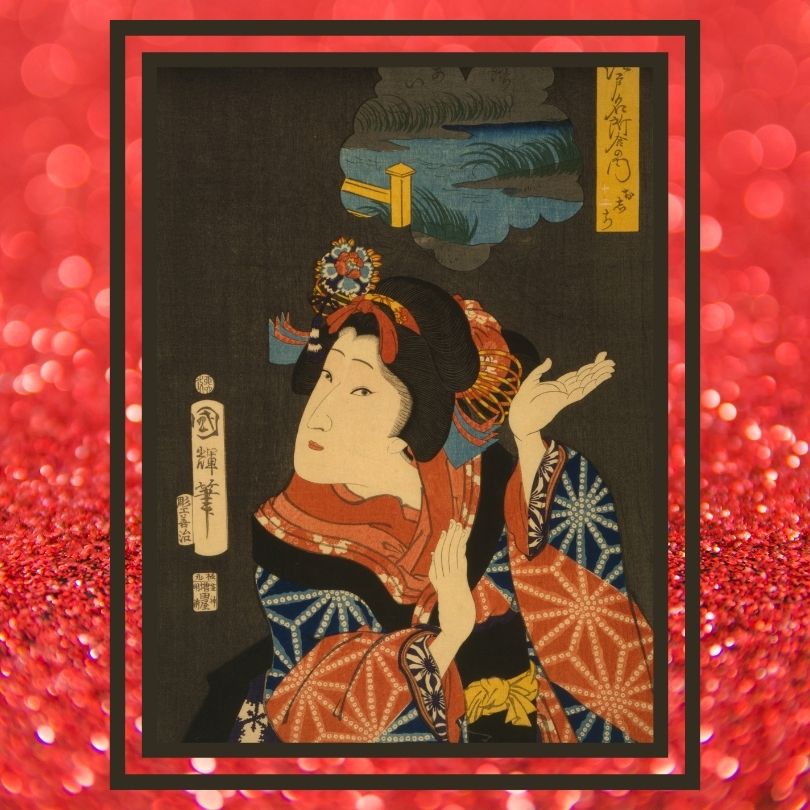
If you’ve been following NHK’s hit TV drama Bakebake (The Ghost Writer’s Wife) like my parents, you already know how Japan’s rich tradition of ghost stories and folklore continues to captivate audiences nationwide. The drama, inspired by the life and works of Lafcadio Hearn (Koizumi Yakumo), has brought renewed attention to the eerie yet beautiful tales that shaped Japan’s cultural imagination.

For those unfamiliar with Hearn, he published Kwaidan: Stories and Studies of Strange Things in 1904, a remarkable compilation of Japanese ghost stories. Before its publication, these tales had been passed down locally in various regions of Japan, but this volume immortalised them and introduced them to the rest of the country- and eventually the world. Mind you, the book was first written in English and only later translated into Japanese.

Without Hearn’s work, stories like Hoichi the Earless (耳なし芳一), Yuki Onna (Snow Woman; 雪女), Rokurokkubi (a long‑necked yokai; ろくろ首), and Mujina (Japanese badger/raccoon dog; ムジナ) might never have reached us in their now‑familiar form.

Mujina is the creature that transforms into the famous yokai known as Nopperabo, on which the rakugo story Nopperabo is based. In that sense, this rakugo piece would not have been born without Hearn’s influence.

Hearn himself- a Greece‑born British citizen- married a Japanese woman named Setsu and became a naturalised Japanese citizen. Before that, he had been married to an African American woman during his time in the United States, despite interracial marriage being illegal at the time. He was a true revolutionary, someone who recognised the hypocrisy of the system and chose to follow his heart.

If you’d like to know more about Nopperabo, I also have a video of my rakugo performance.

How to use chopsticks properly?

Did you know how to use chopsticks properly?

More importantly, did you know how to split ‘waribashi’ or the disposable chopsticks correctly?

Here‘s a video that I made to explain just that with a bit of humour: https://www.facebook.com/reel/1665815060994430/

It’s for St Pierres Sushi, which I’d been a big fan of since before this project. It’s a fun project to work on, so hope it will go on for a bit.

Please like/ comment to let them know what you think!

Uncover the Magic of Rakugo: A Beginner’s Guide to Japanese Comic Storytelling

Happy Lunar New Year! Wishing you and your family peace, happiness, and good fortune!

To celebrate this special occasion, I have decided to write a beginner’s guide to rakugo. It is based on an introduction video that I made for YouTube, but I thought a note that accompanies it would be good addition for you to deepen your understanding of rakugo 😊 So…

Have you ever stumbled upon this storytelling tradition that’s both ancient and strikingly modern? Enter the world of rakugo, the Japanese traditional art of comic storytelling that blends storytelling with theatrical flair. It’s more than just comedy; it’s a window into Japanese culture and a testament to the power of narrative (I dare say!). Hopefully, this guide will introduce you to the unique and exciting world of rakugo!

What Exactly is Rakugo?

At its heart, rakugo is a 400-year-old Japanese tradition of comic storytelling. While you might initially think that it might be like stand-up comedy performed sitting down, but it is actually quite different. It’s a form of narrative performance where the goal is to engage and captivate the audience, not just make them laugh. Rakugo stories can be incredibly diverse, ranging from lighthearted ghost stories and tragedies to fantastical tales, erotica, and even science fiction. I personally see it like a sitcom or an old-time radio show, delivered by a single storyteller.

Key Elements that Make Rakugo Unique

  • Traditional Meets Contemporary: Rakugo is both traditional and contemporary. Performers almost always wear kimono, honoring the traditions of the past, but the stories themselves can explore themes of the present and even the future.
  • Minimalist Staging: In the Tokyo (Edo) style of rakugo, performers use only two props: a fan and a tenugui (traditional Japanese towel). The fan, also known as ‘kaze’ (literally means ‘wind’) in rakugo circles, can be used to create sound effects or symbolise various objects like a calligraphy pen or chopsticks. The tenugui, also referred to as ‘mandala’, is a highly versatile prop that can represent anything from a book to a wallet or even a smartphone!

The Art of the Single Performer

Rakugo is performed by a single storyteller who takes on all the characters within the narrative. Very subtle head movements and shifts in gaze are used to differentiate between each character. The performer’s direction of gaze also indicates social status and whether they are indoors or outdoors.

  • Characters with higher social status are indicated by the performer looking stage right, while those of lower status are indicated by looking stage left.
  • Characters inside a building are indicated by the performer facing stage right while those outside always face towards stage left regardless of the character’s social status.

The Historical Roots of Rakugo

The origin of Rakugo is often traced back to Seigan Temple (誓願寺) in Kyoto. It’s said that a monk named Anrakuan Sakuden (1554-1642) began incorporating characters and anecdotes into his Buddhist sermons to keep his students engaged. His approach was a means of enlivening what might otherwise be considered dry religious teachings. He compiled a book called Seisuishou (醒酔笑) in 1623, marking a significant milestone in the history of rakugo.

Rakugo further developed in two major Japanese cities with regional differences:

  • Osaka/ Kyoto: Rakugo initially evolved as a lively street performance, incorporating music and sound effects.
  • Edo (Tokyo): In Tokyo, rakugo became more of a theatrical performance, focusing on the art of storytelling with minimal props.

Why Should You Experience Rakugo?

Rakugo is a unique experience, far removed from the typical Western theatrical fare. It’s not just a performance; it’s a cultural memory that blends storytelling, minimalist performance, and a connection to Japan’s history. Whether you’re seeking a different kind of comedy or an enriching cultural experience, rakugo offers a journey into a world that is both familiar and wonderfully unique… and sometimes VERY quirky!

If you prefer just watching the video… (maybe I should’ve put the video above, but hey I wanted you to read the article!)

Superstitious Japanese: Luckiest Days of the Year

I have to say that Japanese are superstitious.

I have a large stack of the lucky charms that my dear mother in Japan have sent me over the last 20 plus years.

We avoid numbers like 4 and 9 because 4 (四 shi) rhymes with death (死 shi) while 9 (九 ku) rhymes with suffering (苦 ku).

When I turned 44, my mum sent me heaps of lucky charms to ward off bad luck. I can predict that I’ll be bombarded with some more lucky charms when I turn 49 next year.

Having said that, I grew up more of a cynical sceptic, taking after my dad.

So I thought, but I recently realised that I am actually both sceptic and superstitious- just like the rest of Japan.

Most of us say that we are non-religious, but we love visiting shrines, temples, and even churches and vaguely believe in the unseen world. We are not atheists as some westerners say.

Since I started learning about the traditional Māori calendar called maramataka, I’ve got really curious about our own traditional calendar, and I’ve been learning about it for the last few months.

First, look at the Japanese calendar of this month (June 2024) below. Most of our calendars tell us the luck of each day.

For example, 24th June 2024 is a Taian (大安), one of the luckiest days, and many Japanese weddings are held on a Taian.

On the other hand, 17th June 2024 is a Butsumetsu (仏滅), and it’s the unluckiest day in Japanese calendar. Most couples avoid this day to get married.

As I grew up, I’d always thought Taian was the luckiest day, but I have recently learned that there are luckier days in the year.

It is called Tenshanichi (天赦日 てんしゃにち), which only happens 5-6 times a year. It is believed that all the gods rise up to the heavens and forgive all the sins of people on this day.

When Taian and Tenshanichi overlap, it is even more auspicious.

There is another lucky day called Ichiryumanbaibi (一粒万倍日 いちりゅうまんばいび), which literally means “the day one seed turns into 10,000 seeds”.

It is a good day to start a new project.

Yaoya Oshichi (八百屋お七 1667- 1683)

Yaoya Oshichi (八百屋お七 1667- 1683) is one of the Japanese historical figures who have been immortalised by many novels, kabuki/ bunraku plays, movies and songs including a book called ‘Kōshoku Gonin Onna’ (好色五人女) by the literary giant, Ihara Saikaku (井原 西鶴 1642-1693).

The title of this book translates as ‘Five Women Who Loved Love’. It is a compilation of 5 tragic love stories. I am captivated by this book and have deep respect and empathy for these women who chose love in the time when choosing true love wasn’t an option.

The story began during a great fire of Edo. Oshichi’s family escaped to Kichijo Temple, and they stayed there as a temporary shelter. There Oshichi fell in love with a temple worker called Kichizaburo.

Oshichi’s family house and business (greengrocer) were rebuilt, so they moved out of the temple.

These two lovers kept on kindling their love regardless of many obstacles.

However, one night, Oshichi missed Kichizaburo so much that she could no longer tolerate their circumstance.

As a fire had united them for the first place, she decided to cause another fire herself, hoping this would bring them together once again…

Fortunately, the fire was contained quickly.

Back then, arson resulted in death penalty, and the legal age to be convicted for arson was 16.

The judge was a kind man that he tried to save her by pretending that she was only 15:

“You must be 15 years old, are you not?” “No, I am 16 years old, Sir.”

Then, the judge asked her again:

“You must be 15 years old, are you not?”

Without picking up the hint, Oshichi answered, “I am 16 years old, Sir” once again.

Therefore, she was convicted and burnt at the stake.

Meanwhile, Kichizaburo had fallen sick and only learned about her death 100 days later.

Devastated by the passing of his love, he became a well-respected monk, and served the poor and even used his own money to build a bridge for the community.

Why Fishers in Oiso Do Not Catch Octopuses?

As I promised in the previous post, here is a very fascinating folklore from my hometown, Oiso.

In Oiso, fishers traditionally do not catch octopuses, and this is a folklore that explains why:

During the reign of Emperor Ōjin (270- 310), there lived a fisherman called Takonojo (蛸之丞; たこのじょう). Tako, by the way, means an octopus.

One day, when he was fishing as usual, he saw something glittering, drifting in the waves.

Lo and behold, it was a small octopus, and it began approaching Takanojo’s fishing boat!

The octopus crawled up onto his boat and suddenly began transforming into a shining statue of a Thousand-Armed Kannon (千手観音), which is said to be a manifestation of the Buddha’s compassion.

This is not the actual statue, but here is an example of a Senju Kannon. This Kannon is from the 14th century (Nanbokucho period/ early Muromachi period) and owned by the Tokyo National Museum.

This statue was first enshrined at Koma Temple (高麗寺) but moved to Keikakuin Temple.

Because of this legend, real Oiso fishers do not catch octopuses.

What puzzles me, though, is that Buddhism reached Japan in 538AD, which was well after this miraculous incident happened in my hometown.

Anyhow, no octopus carpaccio for us Oiso-ites 😁

Photo Credits

Senju Kannon

Tokyo National Museum, CC BY 4.0 https://creativecommons.org/licenses/by/4.0, via Wikimedia Commons