Why Fishers in Oiso Do Not Catch Octopuses?

As I promised in the previous post, here is a very fascinating folklore from my hometown, Oiso.

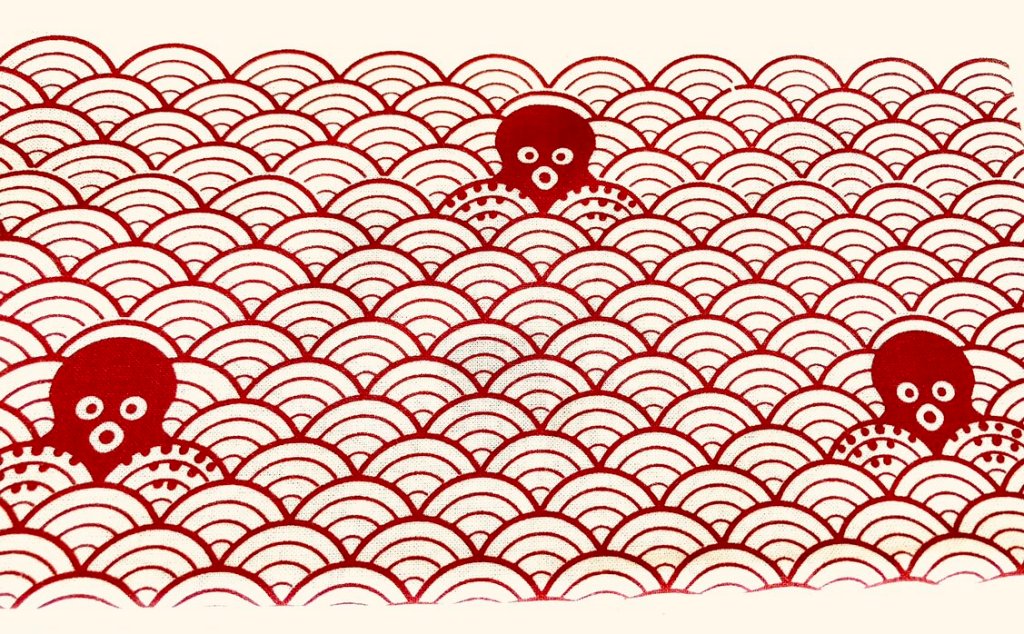
In Oiso, fishers traditionally do not catch octopuses, and this is a folklore that explains why:

During the reign of Emperor Ōjin (270- 310), there lived a fisherman called Takonojo (蛸之丞; たこのじょう). Tako, by the way, means an octopus.

One day, when he was fishing as usual, he saw something glittering, drifting in the waves.

Lo and behold, it was a small octopus, and it began approaching Takanojo’s fishing boat!

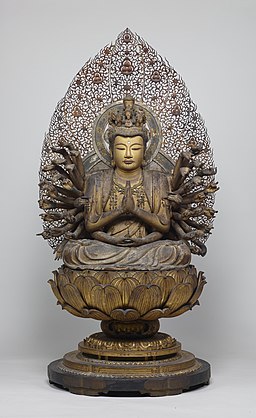
The octopus crawled up onto his boat and suddenly began transforming into a shining statue of a Thousand-Armed Kannon (千手観音), which is said to be a manifestation of the Buddha’s compassion.

This is not the actual statue, but here is an example of a Senju Kannon. This Kannon is from the 14th century (Nanbokucho period/ early Muromachi period) and owned by the Tokyo National Museum.

This statue was first enshrined at Koma Temple (高麗寺) but moved to Keikakuin Temple.

Because of this legend, real Oiso fishers do not catch octopuses.

What puzzles me, though, is that Buddhism reached Japan in 538AD, which was well after this miraculous incident happened in my hometown.

Anyhow, no octopus carpaccio for us Oiso-ites 😁

Photo Credits

Senju Kannon

Tokyo National Museum, CC BY 4.0 https://creativecommons.org/licenses/by/4.0, via Wikimedia Commons

Home Sweet Home Oiso No.1

It’s 4:30AM.

Someone is making loud scraping noise right outside of our bedroom.

I peek through the curtains…

It’s a surfer, busily applying wax on his surfboard.

Then, I realise- I’m back home in Oiso!

My hometown, which is located 70km to the west of Tokyo, perhaps is one of the Top 10 destinations for the Japanese surfers.

The number of surfers per capita is abnormally high, and in summer the main beach literally gets filled with local and visiting surfers. It’s like the Shibuya Station crossing if you know what I mean.

Naturally, the town is full of the outdoor types, hippies, creatives and plain weirdos (like myself).

It’s a historical town, too, that once hosted 2 ex-Japanese Prime Ministers and 6 other PM’s who had their holiday homes there.

Some of you history-buffs may know that it was one of The Fifty-three Stations of the Tōkaidō during the Edo Period (1603-1867).

The Japanese literary giant, Toson Shimazaki, lived in Oiso, too, and Haruki Murakami still has one of his houses there (he’s rich).

I realised that I am describing it like a utopia, but it’s really a sleepy little town with a population of around 30,000 people. Most Japanese would just bypass right through unless they are surfers or history fans.

But to me this is my home, and I have a lot to talk about!

In the next few blog entries, I will be sharing about this town that only the locals know, including its local legends and folklores.

My back and shoulder are not doing great at the moment, so I’ll stop here for now.

See you next time!

Surprisingly Elegant, Narita

『奥様が座席から落ちないよう、奥様のシートベルトをしっかりとお締めください。』
“Okusamaga zasekikara ochinaiyou, okusamano seatbelt wo shikkarito oshimekudasai.”

…was the inflight announcement by a Kiwi cabin crew, who was excellent at Japanese.

His Japanese was literally perfect… except for one word.

In Japanese, “okusama” is a wife, and “okosama” is a child, so instead of saying, “Please fasten your child’s seatbelt so that they do not fall off their seats,” he encouraged us to fasten our wives’ seatbelts- which I did.

Completely unrelated reminiscence from the flight, but yes… Narita!

As you know, Narita International Airport is Japan’s main international airport, and it’s often referred as “Tokyo/ Narita Airport” because its original name was “New Tokyo International Airport”.

This is such a deceptive marketing.

The airport is NOT in Tokyo… AT ALL.

It is in Chiba Prefecture and takes about 80 minutes by an express train to get to Central Tokyo.

It takes at least 3hrs to travel to my hometown in Kanagawa Prefecture.

Before children, we used to travel straight to my hometown after the 11hr flight from New Zealand, but this is not realistic anymore.

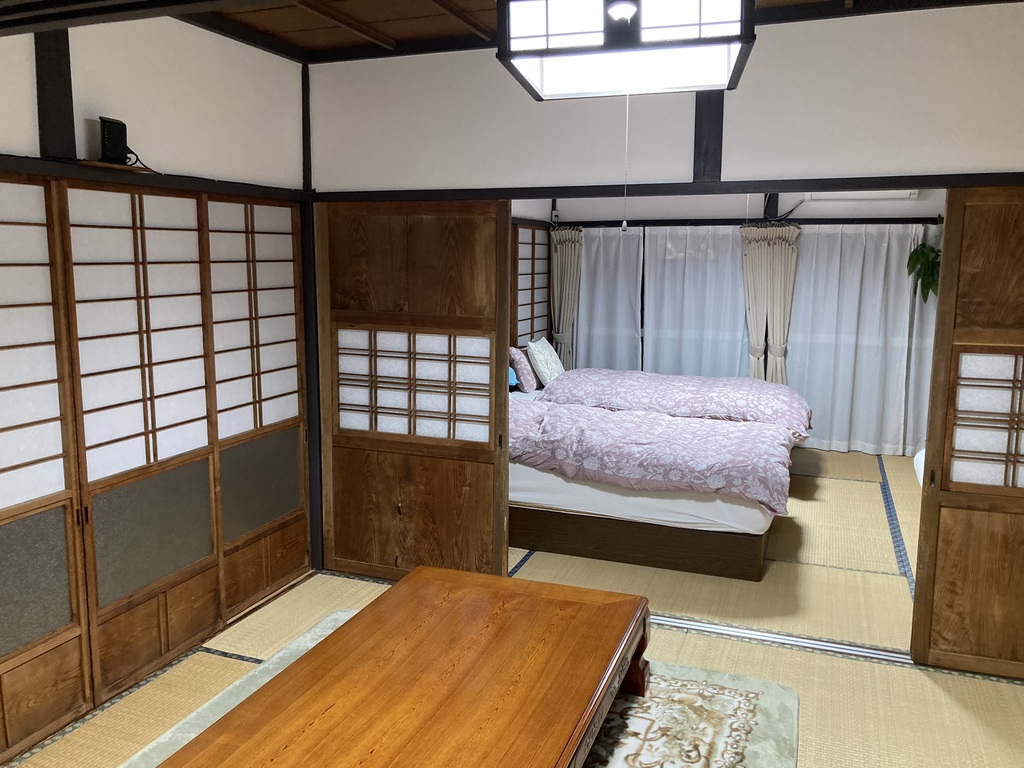
So… we decided to stay at an accommodation nearby for the night to be refreshed before the train journey to my hometown the next day.

This place was only 1.5km from the airport, and the friendly hosts even came to pick us up at the airport!

They have 5-star reviews from over 279 reviewers as of today- no wonder their service was excellent!

But what surprised me the most was how quiet this entire suburb was.

Unlike my preconception, it was very rural and spacious. I couldn’t believe the airport was less than 2km away!

As I explored the community, I realised that this area was full of history. I just hadn’t realised this as I’d always bypassed right through this area to go overseas/ home before this.

The host told me a lot of stories about the Narita area, and now I’m planning to explore properly next time.

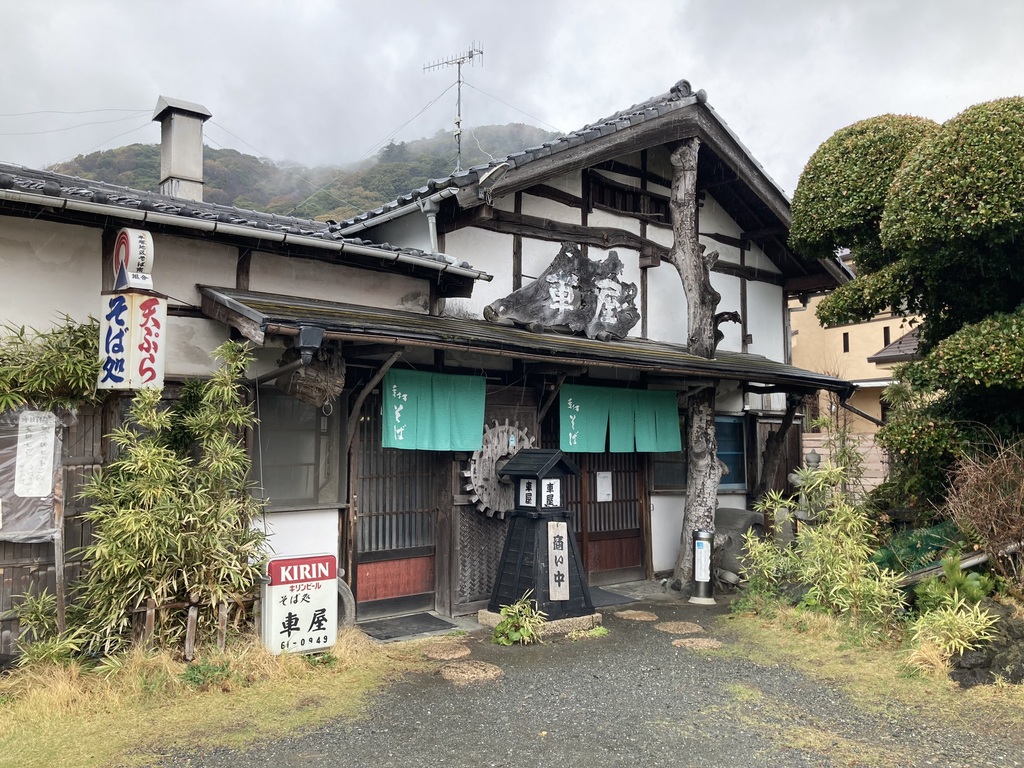
During the morning walk, we discovered a historical farmhouse nearby that had belonged to an American farmer in the Meiji period (1868- 1912) then to the Imperial family. The exterior of the house can be seen in the photo above.

You can probably see that both the Japanese and the western elements are mingling together in the design of the house. We describe this sort of cultural remix as “Wa-Yo-Set-Chu” (わようせっちゅう 和洋折衷).

Perhaps, I’m a good example of a Wa-Yo-Set-Chu person.

Come to think of it, my graduation theatre project at an American university was called “Wa-Yo-Set-Chu with the Mad Japanese Man”… seriously.

Japanese Street Wisdom Podcast Episode 5 [Listen to Your Inner Voice 自分の心の声でやんなさいよ。]

In this episode of the Japanese Street Wisdom Podcast, I will talk about a quote by Yanagiya Kosanji X (十代目 柳家小三治) who just passed away last month on 7 October 2021. He was one of the three rakugo performers to have ever been awarded the status of the Living National Treasure of Japan (人間国宝).

I was inspired to talk about the wisdom of this legendary performer after listening to an interview between him and Hayashiya Shozo IX (九代目 林家正蔵). As my diction of the Japanese quote was horrible (I’ve been away from Japan too long!), here is the actual quote:

上手くなろうと思わないことですよ。もっと下手でいいの。普通の声でやんなさい。自分の心の声でやんなさいよ。Don’t try to improve. It’s OK to be ordinary. Use your own voice. Listen to your inner voice, and let it out.

As you can see, this episode was recorded 11 days after his departure, and I found it interesting to listen to the recording now as my English translation reflected my interpretation of his message back then.

If I’m to translate it again today, I would probably say “listen to your inner voice, and let your heart speak”. I guess I understand what he meant better now.

This episode has some extra rambling and turned out like Japanese Theatre 101, but hey it’s me, my brain is pretty chaotic inside!

Thank you again, Curtis, for reminding and encouraging me to record another episode!

I am always looking for topics for the podcast, so please do comment below if you have anything you want me to talk about.

Finally, if you know where the high-fiving idea came from, please let me know also!

You can also listen to this podcast on Apple Podcasts, Spotify, and YouTube.

See you in the next episode!

Who Invented the Legless Japanese Ghosts?

One of the rakugo stories that I’ve always wanted to listen to is called “The Ghost of Ōkyo” (応挙の幽霊).

In this story, an antique art dealer came across a picture scroll by Maruyama Ōkyo (1733-1795), a famous realist painter from the Edo period (1603-1867), and sold it to one of his clients for 10 Ryo.

The client left 1 Ryo for the bond and went home to pay the remaining amount the following morning.

That night a beautiful ghost came out of the scroll, and she thanked the dealer for offering her sake and chanting a Buddhist sutra for her.

They enjoyed sake together, and the ghost even sang some dodoitsu poetry for him.

The morning arrived, but the ghost was still asleep, being exhausted from the previous night.

The client wondered why the scroll wasn’t delivered and asked the dealer.

The dealer answered, “I’d like to let her sleep a bit longer, sir.”

Now…

This is one of those stories that I probably wouldn’t perform myself as a lot could get lost in translation.

But what really fascinates me is that it is said Ōkyo invented the legless Japanese ghosts.

As you may know, it is traditionally believed in Japan that ghosts do not have legs.

That is why ghost characters in Japanese manga and anime are usually legless.

It is a widely accepted theory that Ōkyo was the one who was responsible for inventing the convention of legless ghosts.

If this is true, it is relatively a modern invention that is less than 300 years old.

On the left is The Ghost of Oyuki by Ōkyo.

Picture Attributions

The Ghost of Oyuki: Maruyama Ōkyo, Public domain, via Wikimedia Commons

Yuurei: Brigham Young University, CC BY-SA 4.0 https://creativecommons.org/licenses/by-sa/4.0, via Wikimedia Commons

What is a “Pillow” in Rakugo?

Can you spot his pillow? And… I wonder who the creepy man under the vase stand is…

Today I learned that the Māori word for a pillow is urunga, which also means “act of entering”, according to Te Aka dictionary.

I don’t know about you, but I found this extremely fascinating!

As some of you may know, the prologue for a rakugo story is called a makura (まくら, 枕), which also means a pillow.

Delivering a good makura is an art form.

You are allowed to talk about literally anything in it.

Some use it to explain some words or old customs that are now hard to understand.

Others use it to warm up themselves and the audience.

You can talk about what happened to you on your way to the performance.

You can make a political statement or even tell some dirty jokes if you wish (though you may lose your fans).

Some performers are so good at makura that they sometimes only do their makura without performing rakugo stories.

This is just my personal interpretation, but I’ve always thought it is called a “pillow” because it acts as the portal to guide the audience members to the dreamlike world of rakugo.

Just like a pillow is the portal to the dream world.

Like the Māori word urunga, makura is the entrance to the world of rakugo.