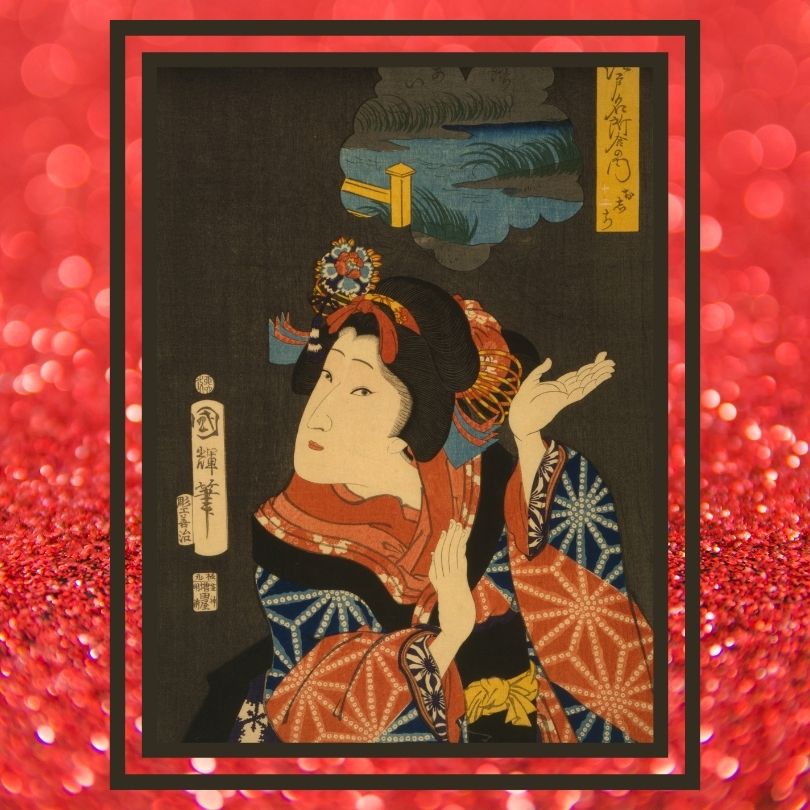

Yaoya Oshichi (八百屋お七 1667- 1683)

Yaoya Oshichi (八百屋お七 1667- 1683) is one of the Japanese historical figures who have been immortalised by many novels, kabuki/ bunraku plays, movies and songs including a book called ‘Kōshoku Gonin Onna’ (好色五人女) by the literary giant, Ihara Saikaku (井原 西鶴 1642-1693).

The title of this book translates as ‘Five Women Who Loved Love’. It is a compilation of 5 tragic love stories. I am captivated by this book and have deep respect and empathy for these women who chose love in the time when choosing true love wasn’t an option.

The story began during a great fire of Edo. Oshichi’s family escaped to Kichijo Temple, and they stayed there as a temporary shelter. There Oshichi fell in love with a temple worker called Kichizaburo.

Oshichi’s family house and business (greengrocer) were rebuilt, so they moved out of the temple.

These two lovers kept on kindling their love regardless of many obstacles.

However, one night, Oshichi missed Kichizaburo so much that she could no longer tolerate their circumstance.

As a fire had united them for the first place, she decided to cause another fire herself, hoping this would bring them together once again…

Fortunately, the fire was contained quickly.

Back then, arson resulted in death penalty, and the legal age to be convicted for arson was 16.

The judge was a kind man that he tried to save her by pretending that she was only 15:

“You must be 15 years old, are you not?” “No, I am 16 years old, Sir.”

Then, the judge asked her again:

“You must be 15 years old, are you not?”

Without picking up the hint, Oshichi answered, “I am 16 years old, Sir” once again.

Therefore, she was convicted and burnt at the stake.

Meanwhile, Kichizaburo had fallen sick and only learned about her death 100 days later.

Devastated by the passing of his love, he became a well-respected monk, and served the poor and even used his own money to build a bridge for the community.

Home Sweet Home Oiso No.2 [Tōkōin Temple 東光院]

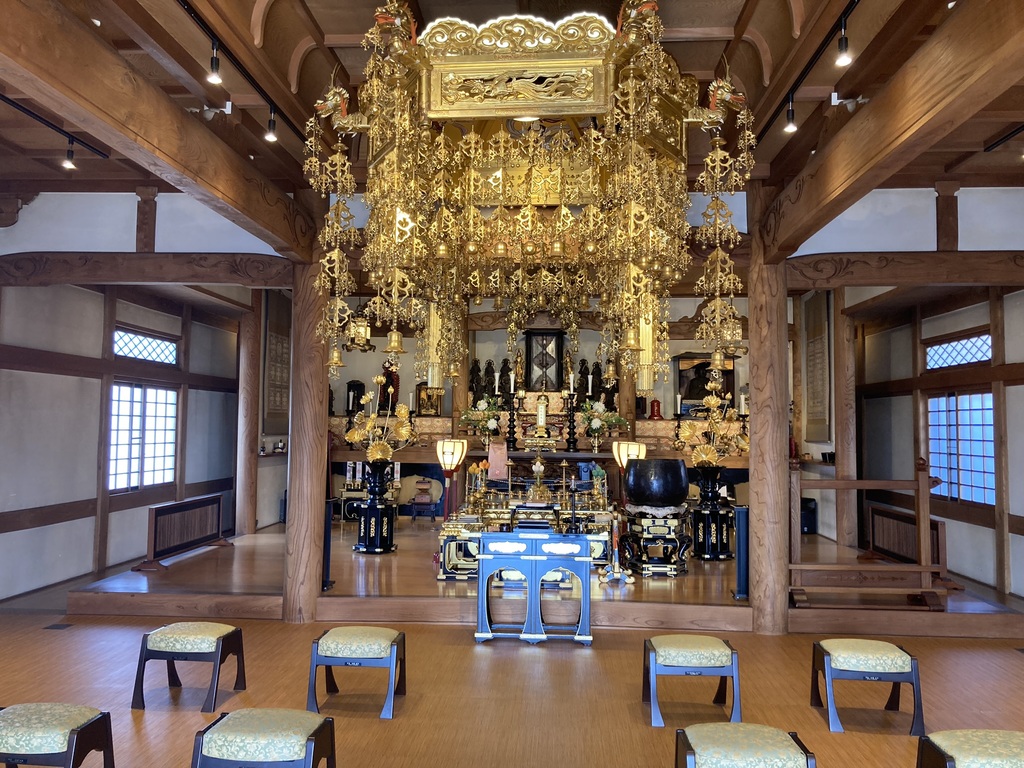
I have to say that one of the highlights from my recent Japan trip was Tōkōin Temple (東光院) in my hometown, Oiso.

Mind you, I am not at all a religious person.

I only visited this temple to pay respect to my uncle who passed on during the pandemic, but this temple really blew my mind and showed me what it is to adapt our old traditions to this ever-changing world.

As you would know, not taking off your shoes to enter a Japanese house is a cardinal sin.

If I’m allowed to be a bit passive aggressive right now, each time my NZ European family members and friends walk into my house with their shoes on, I’m internally very, VERY cross! (Now you know!)

This cultural rule is upheld even more strictly at places of worship such as shrines, temples, and even some churches in Japan.

But, as you can see in one of the pictures above (“Keep your shoes on” sign), this temple broke this sacred cultural law to make the sanctuary barrier free for the elderly and people with disability (you need to bend down to remove your shoes, which is hard for them).

I was born and raised in Japan and spent about 21 years of my life there, but it was the very first time to visit a temple that allows you to keep your shoes on… in the sanctuary!!!

They also removed tatami mattresses and placed chairs in the sanctuary so that people don’t have to sit in the seiza position. It is a seiza-free temple!!!

I don’t know any other temple that does this. Please comment below if you know any other temple like this one in Japan… This is that rare!

But what really surprised me doesn’t end here.

This temple has a cozy community space with a library which is completely open to the public- anyone can just walk in and use it to study, to work, up to you.

When my family entered the space, there were a lot of after-school primary school students, reading manga, playing games together, or doing homework.

Then joined one of the monks (who once was a boxer!), and they all started watching the Final of 2023 World Baseball Classic together!

As you may know, Japan beat US and won the championship this year 😁

Did I say that the temple also provides tea, coffee, hot lemon drink, and sometimes even snacks free of charge.

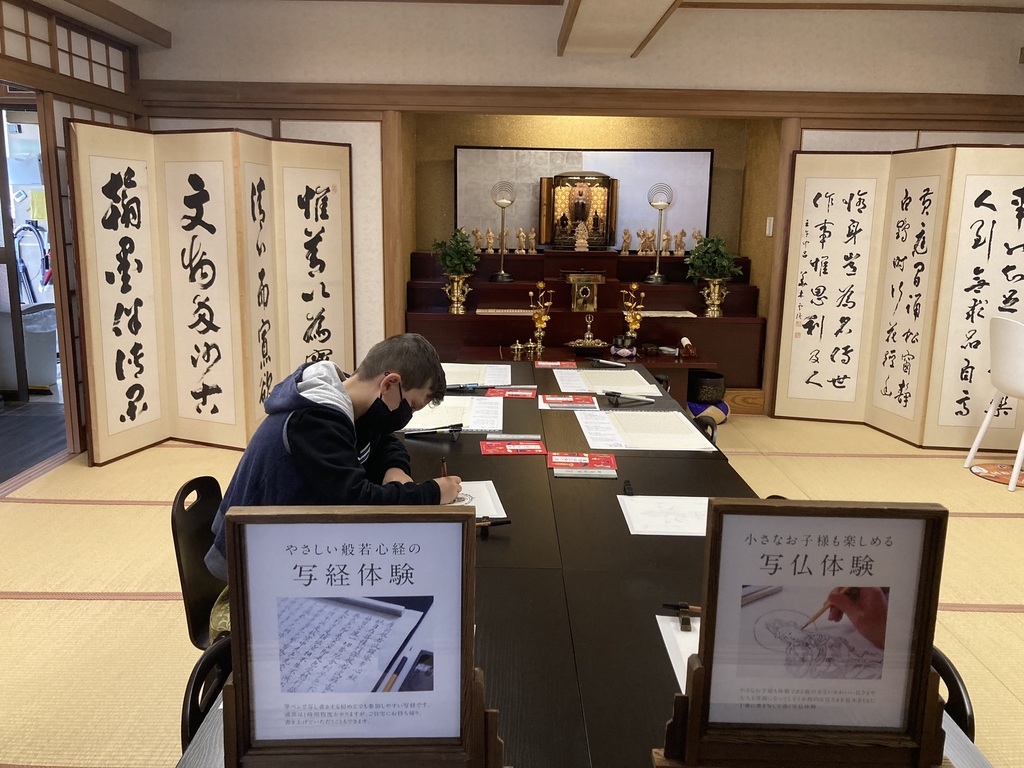
If you want to have some quiet time to meditate, there is space available, too, where you can do sutra copying (写経) or “shabutsu” (写仏), which is a meditative practice to trace pictures of Buddha and other Buddhist deities.

My son was really amused by the tracing activity and completed it in a few minutes- though it’s supposed to be done very slowly to contemplate.

The temple also works closely with doctors, nurses, social workers, psychotherapists to offer free help for those who cannot afford these kinds of services themselves.

They invite academics to do open lectures on non-Buddhist subjects like economics as well.

There are even more radical things they do, but I’ll stop here to not to bore you!

My learning from their adaptability is that traditional arts such as rakugo also have to keep evolving, adapting themselves to the time, here and now. I have to say this temple is way ahead of the world of rakugo.

Why Fishers in Oiso Do Not Catch Octopuses?

As I promised in the previous post, here is a very fascinating folklore from my hometown, Oiso.

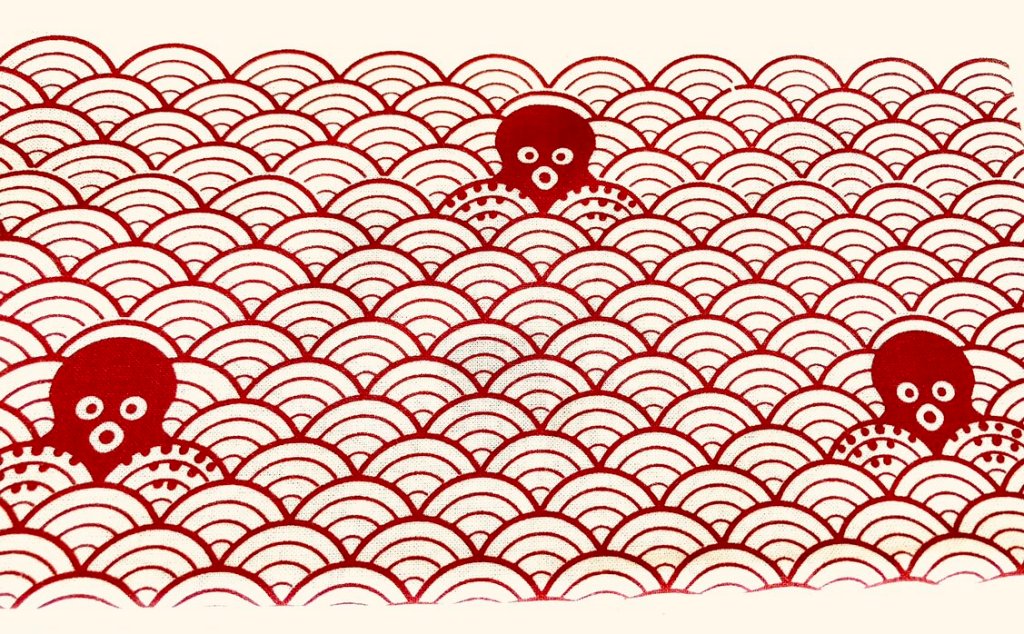
In Oiso, fishers traditionally do not catch octopuses, and this is a folklore that explains why:

During the reign of Emperor Ōjin (270- 310), there lived a fisherman called Takonojo (蛸之丞; たこのじょう). Tako, by the way, means an octopus.

One day, when he was fishing as usual, he saw something glittering, drifting in the waves.

Lo and behold, it was a small octopus, and it began approaching Takanojo’s fishing boat!

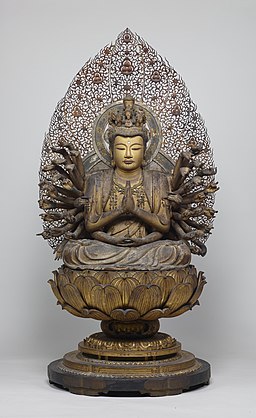
The octopus crawled up onto his boat and suddenly began transforming into a shining statue of a Thousand-Armed Kannon (千手観音), which is said to be a manifestation of the Buddha’s compassion.

This is not the actual statue, but here is an example of a Senju Kannon. This Kannon is from the 14th century (Nanbokucho period/ early Muromachi period) and owned by the Tokyo National Museum.

This statue was first enshrined at Koma Temple (高麗寺) but moved to Keikakuin Temple.

Because of this legend, real Oiso fishers do not catch octopuses.

What puzzles me, though, is that Buddhism reached Japan in 538AD, which was well after this miraculous incident happened in my hometown.

Anyhow, no octopus carpaccio for us Oiso-ites 😁

Photo Credits

Senju Kannon

Tokyo National Museum, CC BY 4.0 https://creativecommons.org/licenses/by/4.0, via Wikimedia Commons

Home Sweet Home Oiso No.1

It’s 4:30AM.

Someone is making loud scraping noise right outside of our bedroom.

I peek through the curtains…

It’s a surfer, busily applying wax on his surfboard.

Then, I realise- I’m back home in Oiso!

My hometown, which is located 70km to the west of Tokyo, perhaps is one of the Top 10 destinations for the Japanese surfers.

The number of surfers per capita is abnormally high, and in summer the main beach literally gets filled with local and visiting surfers. It’s like the Shibuya Station crossing if you know what I mean.

Naturally, the town is full of the outdoor types, hippies, creatives and plain weirdos (like myself).

It’s a historical town, too, that once hosted 2 ex-Japanese Prime Ministers and 6 other PM’s who had their holiday homes there.

Some of you history-buffs may know that it was one of The Fifty-three Stations of the Tōkaidō during the Edo Period (1603-1867).

The Japanese literary giant, Toson Shimazaki, lived in Oiso, too, and Haruki Murakami still has one of his houses there (he’s rich).

I realised that I am describing it like a utopia, but it’s really a sleepy little town with a population of around 30,000 people. Most Japanese would just bypass right through unless they are surfers or history fans.

But to me this is my home, and I have a lot to talk about!

In the next few blog entries, I will be sharing about this town that only the locals know, including its local legends and folklores.

My back and shoulder are not doing great at the moment, so I’ll stop here for now.

See you next time!

Surprisingly Elegant, Narita

『奥様が座席から落ちないよう、奥様のシートベルトをしっかりとお締めください。』
“Okusamaga zasekikara ochinaiyou, okusamano seatbelt wo shikkarito oshimekudasai.”

…was the inflight announcement by a Kiwi cabin crew, who was excellent at Japanese.

His Japanese was literally perfect… except for one word.

In Japanese, “okusama” is a wife, and “okosama” is a child, so instead of saying, “Please fasten your child’s seatbelt so that they do not fall off their seats,” he encouraged us to fasten our wives’ seatbelts- which I did.

Completely unrelated reminiscence from the flight, but yes… Narita!

As you know, Narita International Airport is Japan’s main international airport, and it’s often referred as “Tokyo/ Narita Airport” because its original name was “New Tokyo International Airport”.

This is such a deceptive marketing.

The airport is NOT in Tokyo… AT ALL.

It is in Chiba Prefecture and takes about 80 minutes by an express train to get to Central Tokyo.

It takes at least 3hrs to travel to my hometown in Kanagawa Prefecture.

Before children, we used to travel straight to my hometown after the 11hr flight from New Zealand, but this is not realistic anymore.

So… we decided to stay at an accommodation nearby for the night to be refreshed before the train journey to my hometown the next day.

This place was only 1.5km from the airport, and the friendly hosts even came to pick us up at the airport!

They have 5-star reviews from over 279 reviewers as of today- no wonder their service was excellent!

But what surprised me the most was how quiet this entire suburb was.

Unlike my preconception, it was very rural and spacious. I couldn’t believe the airport was less than 2km away!

As I explored the community, I realised that this area was full of history. I just hadn’t realised this as I’d always bypassed right through this area to go overseas/ home before this.

The host told me a lot of stories about the Narita area, and now I’m planning to explore properly next time.

During the morning walk, we discovered a historical farmhouse nearby that had belonged to an American farmer in the Meiji period (1868- 1912) then to the Imperial family. The exterior of the house can be seen in the photo above.

You can probably see that both the Japanese and the western elements are mingling together in the design of the house. We describe this sort of cultural remix as “Wa-Yo-Set-Chu” (わようせっちゅう 和洋折衷).

Perhaps, I’m a good example of a Wa-Yo-Set-Chu person.

Come to think of it, my graduation theatre project at an American university was called “Wa-Yo-Set-Chu with the Mad Japanese Man”… seriously.

Japanese Street Wisdom Podcast Episode 5 [Listen to Your Inner Voice 自分の心の声でやんなさいよ。]

In this episode of the Japanese Street Wisdom Podcast, I will talk about a quote by Yanagiya Kosanji X (十代目 柳家小三治) who just passed away last month on 7 October 2021. He was one of the three rakugo performers to have ever been awarded the status of the Living National Treasure of Japan (人間国宝).

I was inspired to talk about the wisdom of this legendary performer after listening to an interview between him and Hayashiya Shozo IX (九代目 林家正蔵). As my diction of the Japanese quote was horrible (I’ve been away from Japan too long!), here is the actual quote:

上手くなろうと思わないことですよ。もっと下手でいいの。普通の声でやんなさい。自分の心の声でやんなさいよ。Don’t try to improve. It’s OK to be ordinary. Use your own voice. Listen to your inner voice, and let it out.

As you can see, this episode was recorded 11 days after his departure, and I found it interesting to listen to the recording now as my English translation reflected my interpretation of his message back then.

If I’m to translate it again today, I would probably say “listen to your inner voice, and let your heart speak”. I guess I understand what he meant better now.

This episode has some extra rambling and turned out like Japanese Theatre 101, but hey it’s me, my brain is pretty chaotic inside!

Thank you again, Curtis, for reminding and encouraging me to record another episode!

I am always looking for topics for the podcast, so please do comment below if you have anything you want me to talk about.

Finally, if you know where the high-fiving idea came from, please let me know also!

You can also listen to this podcast on Apple Podcasts, Spotify, and YouTube.

See you in the next episode!