Koizumi Yakumo and Nopperabo, the Faceless

If you’ve been following NHK’s hit TV drama Bakebake (The Ghost Writer’s Wife) like my parents, you already know how Japan’s rich tradition of ghost stories and folklore continues to captivate audiences nationwide. The drama, inspired by the life and works of Lafcadio Hearn (Koizumi Yakumo), has brought renewed attention to the eerie yet beautiful tales that shaped Japan’s cultural imagination.

For those unfamiliar with Hearn, he published Kwaidan: Stories and Studies of Strange Things in 1904, a remarkable compilation of Japanese ghost stories. Before its publication, these tales had been passed down locally in various regions of Japan, but this volume immortalised them and introduced them to the rest of the country- and eventually the world. Mind you, the book was first written in English and only later translated into Japanese.

Without Hearn’s work, stories like Hoichi the Earless (耳なし芳一), Yuki Onna (Snow Woman; 雪女), Rokurokkubi (a long‑necked yokai; ろくろ首), and Mujina (Japanese badger/raccoon dog; ムジナ) might never have reached us in their now‑familiar form.

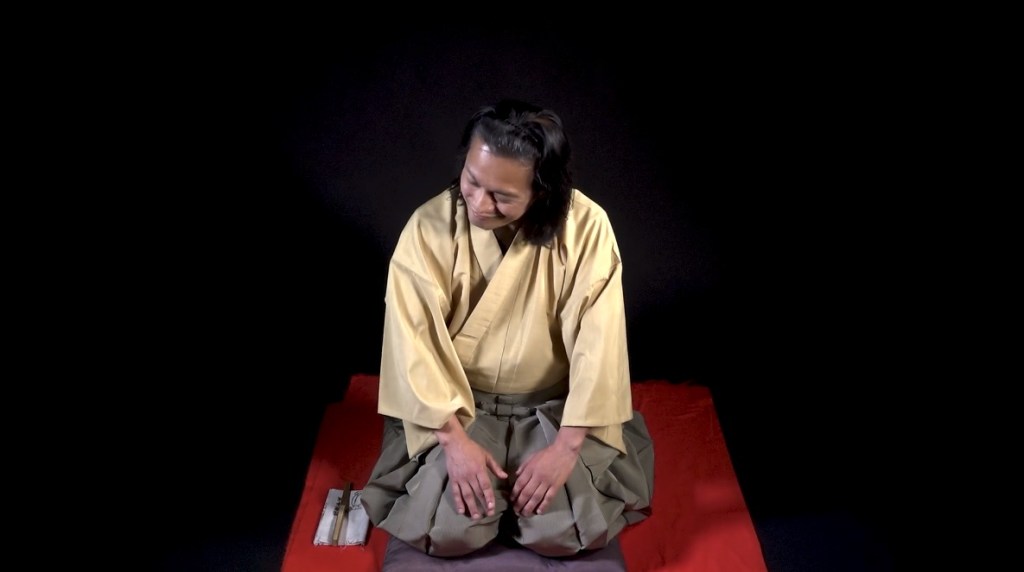
Mujina is the creature that transforms into the famous yokai known as Nopperabo, on which the rakugo story Nopperabo is based. In that sense, this rakugo piece would not have been born without Hearn’s influence.

Hearn himself- a Greece‑born British citizen- married a Japanese woman named Setsu and became a naturalised Japanese citizen. Before that, he had been married to an African American woman during his time in the United States, despite interracial marriage being illegal at the time. He was a true revolutionary, someone who recognised the hypocrisy of the system and chose to follow his heart.

If you’d like to know more about Nopperabo, I also have a video of my rakugo performance.

Uncover the Magic of Rakugo: A Beginner’s Guide to Japanese Comic Storytelling

Happy Lunar New Year! Wishing you and your family peace, happiness, and good fortune!

To celebrate this special occasion, I have decided to write a beginner’s guide to rakugo. It is based on an introduction video that I made for YouTube, but I thought a note that accompanies it would be good addition for you to deepen your understanding of rakugo 😊 So…

Have you ever stumbled upon this storytelling tradition that’s both ancient and strikingly modern? Enter the world of rakugo, the Japanese traditional art of comic storytelling that blends storytelling with theatrical flair. It’s more than just comedy; it’s a window into Japanese culture and a testament to the power of narrative (I dare say!). Hopefully, this guide will introduce you to the unique and exciting world of rakugo!

What Exactly is Rakugo?

At its heart, rakugo is a 400-year-old Japanese tradition of comic storytelling. While you might initially think that it might be like stand-up comedy performed sitting down, but it is actually quite different. It’s a form of narrative performance where the goal is to engage and captivate the audience, not just make them laugh. Rakugo stories can be incredibly diverse, ranging from lighthearted ghost stories and tragedies to fantastical tales, erotica, and even science fiction. I personally see it like a sitcom or an old-time radio show, delivered by a single storyteller.

Key Elements that Make Rakugo Unique

  • Traditional Meets Contemporary: Rakugo is both traditional and contemporary. Performers almost always wear kimono, honoring the traditions of the past, but the stories themselves can explore themes of the present and even the future.
  • Minimalist Staging: In the Tokyo (Edo) style of rakugo, performers use only two props: a fan and a tenugui (traditional Japanese towel). The fan, also known as ‘kaze’ (literally means ‘wind’) in rakugo circles, can be used to create sound effects or symbolise various objects like a calligraphy pen or chopsticks. The tenugui, also referred to as ‘mandala’, is a highly versatile prop that can represent anything from a book to a wallet or even a smartphone!

The Art of the Single Performer

Rakugo is performed by a single storyteller who takes on all the characters within the narrative. Very subtle head movements and shifts in gaze are used to differentiate between each character. The performer’s direction of gaze also indicates social status and whether they are indoors or outdoors.

  • Characters with higher social status are indicated by the performer looking stage right, while those of lower status are indicated by looking stage left.
  • Characters inside a building are indicated by the performer facing stage right while those outside always face towards stage left regardless of the character’s social status.

The Historical Roots of Rakugo

The origin of Rakugo is often traced back to Seigan Temple (誓願寺) in Kyoto. It’s said that a monk named Anrakuan Sakuden (1554-1642) began incorporating characters and anecdotes into his Buddhist sermons to keep his students engaged. His approach was a means of enlivening what might otherwise be considered dry religious teachings. He compiled a book called Seisuishou (醒酔笑) in 1623, marking a significant milestone in the history of rakugo.

Rakugo further developed in two major Japanese cities with regional differences:

  • Osaka/ Kyoto: Rakugo initially evolved as a lively street performance, incorporating music and sound effects.
  • Edo (Tokyo): In Tokyo, rakugo became more of a theatrical performance, focusing on the art of storytelling with minimal props.

Why Should You Experience Rakugo?

Rakugo is a unique experience, far removed from the typical Western theatrical fare. It’s not just a performance; it’s a cultural memory that blends storytelling, minimalist performance, and a connection to Japan’s history. Whether you’re seeking a different kind of comedy or an enriching cultural experience, rakugo offers a journey into a world that is both familiar and wonderfully unique… and sometimes VERY quirky!

If you prefer just watching the video… (maybe I should’ve put the video above, but hey I wanted you to read the article!)

[Updates] What’s Up With Eishi?

Hi all, hope everything is well with you!

Here in New Zealand, Matariki (Māori New Year) is fast-approaching, and I am super excited to attend various events that are already being held throughout Auckland.

As Matariki symbolises a new beginning, I have decided to turn my life around as it hasn’t been super easy for the last few months… here’re some updates!

1. Change My Approach to Rakugo

I have to admit, I have been quite egotistical about my rakugo, and I haven’t asked my supporters what YOU want to see in my rakugo work.

Sure, it is one way of doing rakugo to be staunch about what I do, but it is not my style especially when rakugo hasn’t taken off as much as I want in New Zealand or the rest of the world (outside of Japan).

So it is time to listen to you!

Please do comment here or on one of my SNS so I can repent my self-centred approach to rakugo 😁 Your opinions matter to me!

2. REVIVING My YouTube Channel

As some of you know, I have been suffering from a frozen shoulder and nerve pains from a back injury that I had while travelling in Japan a few months ago. Thank you for your concern😊- I am getting better, but the huge problem is that… I cannot sit in the seiza position for longer than 15-20 minutes.

In order to do a public performance, I need to be able to do seiza for at least 60-75 minutes, but this is not possible at the moment.

So… I have decided to revive the channel as this is a form of expression that I can easily do even with my current restrictions.

Please follow my channel if you would like to support me. Just one click away!

3. Storytelling Group

As I mentioned in another post, one of my dreams has always been to produce storytelling performances curating stories from all over the world including my art, rakugo.

In the past, I’d had several attempts to do this, even involving my producer friend, but it never came true.

My current physical restrictions reminded me of this long-term dream, and this is something I’d like to make it happen soon!

4. Māori Learning

I have finally finished all the Māori courses at my Wānanga (Māori university)! This is just the beginning. My learning continues!

5. Online Shop

I have opened an online shop. If you are interested!

This is it for now.

Thank you for your continued support!

Japanese Street Wisdom Podcast Episode 5 [Listen to Your Inner Voice 自分の心の声でやんなさいよ。]

In this episode of the Japanese Street Wisdom Podcast, I will talk about a quote by Yanagiya Kosanji X (十代目 柳家小三治) who just passed away last month on 7 October 2021. He was one of the three rakugo performers to have ever been awarded the status of the Living National Treasure of Japan (人間国宝).

I was inspired to talk about the wisdom of this legendary performer after listening to an interview between him and Hayashiya Shozo IX (九代目 林家正蔵). As my diction of the Japanese quote was horrible (I’ve been away from Japan too long!), here is the actual quote:

上手くなろうと思わないことですよ。もっと下手でいいの。普通の声でやんなさい。自分の心の声でやんなさいよ。Don’t try to improve. It’s OK to be ordinary. Use your own voice. Listen to your inner voice, and let it out.

As you can see, this episode was recorded 11 days after his departure, and I found it interesting to listen to the recording now as my English translation reflected my interpretation of his message back then.

If I’m to translate it again today, I would probably say “listen to your inner voice, and let your heart speak”. I guess I understand what he meant better now.

This episode has some extra rambling and turned out like Japanese Theatre 101, but hey it’s me, my brain is pretty chaotic inside!

Thank you again, Curtis, for reminding and encouraging me to record another episode!

I am always looking for topics for the podcast, so please do comment below if you have anything you want me to talk about.

Finally, if you know where the high-fiving idea came from, please let me know also!

You can also listen to this podcast on Apple Podcasts, Spotify, and YouTube.

See you in the next episode!

Short Film “Half-Life”

This year I’ve had an honour of working closely with a multi-talented artist, Fiona Amundsen.

About two months ago, our short film, which incorporates rakugo, the Aikido concept of “zanshin” (残心), and remembrance of WWII, was released on Asia New Zealand Foundation’s digital platforms.

This work was a part of “IN TOUCH arts commissions” by the foundation, and I feel very privileged to be a part of this project.

You can still view this film/ artwork, but before you watch it, I’d like you to know a few things:

  1. My family’s experience in Nagasaki is only a personalised way of remembering our mistakes as humanity as a whole. I am deeply ashamed of what my Japanese ancestors did to many Asian nations and others, and this is no way our attempt to victimise Japanese.
  2. It is our way of finding the universal message of peace in the ordinary, everyday things.
  3. Part 1 is very dark and many may give up watching the rest, but Part 2 has some humour in it based on my own experience with my grandfather. But Part 2 only makes sense if you watch Part 1…

I decided to write this first because someone who probably hadn’t watched the work nor read the interview commented as below on the foundation’s SNS:

“Great idea! Let’s remember Nanking, Rangoon, Singapore, Jakaraka [sic], Port Moresby, and many many others too shall we?”

This work was created to do exactly that!

Here is the link to our work. You can also find our interviews on the page. Some of the super intellectual comments are by Fiona 😁

You can find other commissioned work here.

May peace prevail upon us all!

Kia tau te rangimārie ki a tatou katoa!

我々と共に平和がありますように。

Eishi’s Rakugo Commentary No.4 [A New Year Visit to the Shrine 初天神]

Traditional Japanese Kites

Hatsutenjin (初天神) or “A New Year Visit to the Shrine”* or even more precisely “A New Year Visit to Tenjin Shrine” is one of the most widely performed rakugo stories in Japan.

As the title suggests, it is a story about a New Year visit to a shrine where Tenjin (天神) is enshrined, and it is considered an auspicious story and often performed in January.

Tenjin is the god of learning, but he was an actual historical figure called Sugawara no Michizane (菅原道真 845-903 AD) before enshrined.

Michizane was a scholar, politician, and poet of the Heian period (平安時代 794-1185). He was enshrined as a god because of his immense contribution to the academia.

Tenjin Shrine or Tenmangu is where Michizane is enshrined, and shrines all over Japan enshrine him as their patron god. Among them, Dazaifu Tenmangu, Osaka Tenmangu, Kitano Tenmangu, and Kameido Tenjin Shrine are particularly famous.

Sugawara no Michizane (菅原 道真 845-903 AD)

Hastutenjin was originally a Kamigata Rakugo** created by Shofukutei Shochiku (松富久亭松竹 DOB/ DOD unknown), the founding father of the Shofukutei (笑福亭) clan. It was exported to Tokyo by Sanyutei Enba III (三代目三遊亭圓馬 1882-1945).

Having said that…

this story is almost nothing to do with Tenjin Shrine itself, but it’s a simple lighthearted story about a relationship between a father and his son.

You can watch the story at the bottom of this post, but here is what dango looks like.

Dango

Hope you will enjoy the story!!!

* You might have noticed that my YouTube thumbnail says “The First Visit to Tenjin Shrine”, but it is mistranslated. The official translation by my master Kanariya Eiraku is “A New Year Visit to the Shrine”, but I also presented a more literal translation “A New Year Visit to Tenjin Shrine” for educational purposes.

** Rakugo from the Kansai region especially from Osaka and Kyoto

Photos Credit

Japanese Kites: Momotarou2012, CC BY-SA 3.0 https://creativecommons.org/licenses/by-sa/3.0, via Wikimedia Commons

Reference

落語手帖 矢野誠一