“Akane-banashi” THE Rakugo Manga is Getting a TV Anime in 2026!

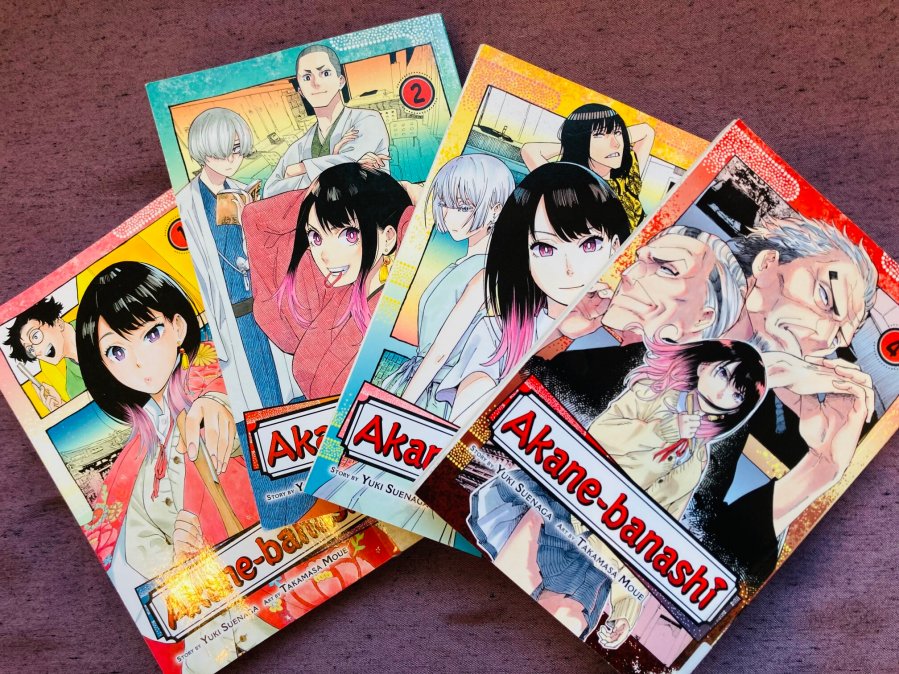
🎉 Super exciting news for rakugo and anime lovers! The acclaimed rakugo manga Akane-banashi is officially getting an anime adaptation in 2026!

If you’ve already read the manga, you know how brilliantly it captures the dynamic spirit and deep traditions of rakugo- bringing this storytelling art to audiences who may be discovering it for the first time.

What makes Akane-banashi even more special is its amazing protagonist: Akane Osaki. In a genre (shonen manga) often dominated by male leads, this Shonen Jump series stands out with a strong, determined young woman at its heart- and this alone is worth celebrating!

Created by writer Yuki Suenaga and illustrator Takamasa Moue, the story follows Akane, a girl mesmerised by her father’s rakugo performances. She spends countless hours imitating his stories, secretly watching his training sessions. But when her father is abruptly expelled from the rakugo association and forced to stop performing, Akane sets out to uncover the truth behind his dismissal. Guided by her father’s former master, she begins her own journey to become a rakugo performer.

While Showa Genroku Rakugo Shinju helped introduce rakugo to international audiences through its poignant (and sometimes super depressing…) storytelling, I believe Akane-banashi has the potential to reach even further.

Since its debut in Weekly Shonen Jump in February 2022, Akane-banashi has been a standout hit, earning nominations for both the 16th Manga Taisho Award and the 47th Kodansha Manga Award.

This is one anime adaptation you won’t want to miss!

[Book Review] From Girdle Maker to Water Commissioner – THE GREAT GILDERSLEEVE: The Pioneering Spin-off Program That Made Broadcast History!

For enthusiasts of history and the golden age of radio, a remarkable new title has arrived: Kristine Ohkubo’s From Girdle Maker to Water Commissioner – THE GREAT GILDERSLEEVE: The Pioneering Spin-off Program That Made Broadcast History! A finalist in the 19th Annual National Indie Excellence Awards, this book transports readers to the enchanting and hilarious world of Throckmorton P. Gildersleeve, one of radio’s most beloved characters.

I had the privilege of being introduced to Gildersleeve’s eccentric stories by the author herself before the book’s publication, and I quickly became a devoted fan. Informative and engaging, the book traces the series’ evolution over the years. I particularly enjoyed delving into the actors’ detailed biographies and backstories.

You may know Ohkubo for her authoritative works on rakugo: Talking About Rakugo (Volumes 1 and 2) and Fallen Words. I can clearly see how her fascination with old-time radio drew her to the traditional Japanese art of rakugo. Both evoke a nostalgic world where family and traditional values take centre stage.

In the appendix, you’ll find complete episode logs—a treasure trove for fans, collectors, and researchers alike. These logs provide a roadmap back to the nostalgic world many of us long to revisit.

⭐⭐⭐⭐⭐ Thoroughly recommended for aficionados of old-time radio, comedy lovers, and rakugo enthusiasts alike!!!

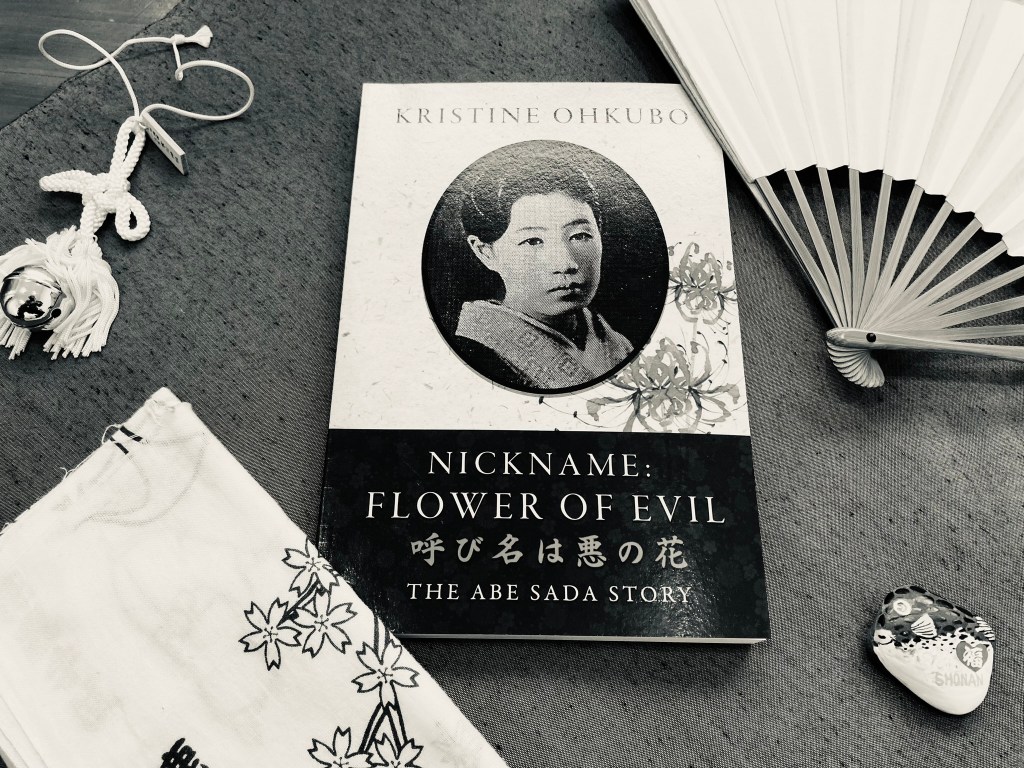
[Book Review] Nickname: Flower of Evil (呼び名は悪の花)

Rating: 5 out of 5.

Kristine Ohkubo’s ‘Nickname: Flower of Evil (呼び名は悪の花)’ is a compelling exploration of Japan’s dark past, spotlighting its neglect of women’s rights that still continues even today. Recently honoured as an American Legacy Book Awards Finalist for 2024, this work delves deeply into the controversial life of Abe Sada, whose story epitomised the struggles of women in early 20th-century Japan.

Ohkubo’s masterful narrative reveals the harsh realities faced by women during a time of intense modernisation that began after the Meiji Restoration. Through the lens of Abe Sada’s infamous crime, the book examines gender inequality and societal pressures that led to her desperate actions. She was, indeed, a victim of our dark history.

This work is a reminder of the ongoing issues of gender inequality in one of the most “developed” countries in the world. As always, Ohkubo uncovered the truths hidden in the shadows of the past to give a voice to those who had no voice.

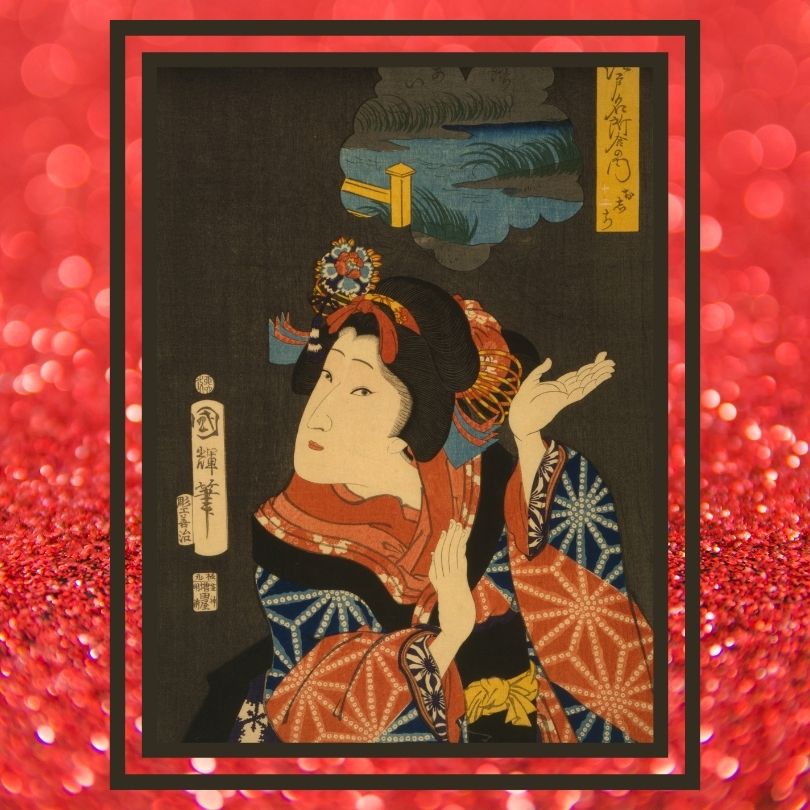
Yaoya Oshichi (八百屋お七 1667- 1683)

Yaoya Oshichi (八百屋お七 1667- 1683) is one of the Japanese historical figures who have been immortalised by many novels, kabuki/ bunraku plays, movies and songs including a book called ‘Kōshoku Gonin Onna’ (好色五人女) by the literary giant, Ihara Saikaku (井原 西鶴 1642-1693).

The title of this book translates as ‘Five Women Who Loved Love’. It is a compilation of 5 tragic love stories. I am captivated by this book and have deep respect and empathy for these women who chose love in the time when choosing true love wasn’t an option.

The story began during a great fire of Edo. Oshichi’s family escaped to Kichijo Temple, and they stayed there as a temporary shelter. There Oshichi fell in love with a temple worker called Kichizaburo.

Oshichi’s family house and business (greengrocer) were rebuilt, so they moved out of the temple.

These two lovers kept on kindling their love regardless of many obstacles.

However, one night, Oshichi missed Kichizaburo so much that she could no longer tolerate their circumstance.

As a fire had united them for the first place, she decided to cause another fire herself, hoping this would bring them together once again…

Fortunately, the fire was contained quickly.

Back then, arson resulted in death penalty, and the legal age to be convicted for arson was 16.

The judge was a kind man that he tried to save her by pretending that she was only 15:

“You must be 15 years old, are you not?” “No, I am 16 years old, Sir.”

Then, the judge asked her again:

“You must be 15 years old, are you not?”

Without picking up the hint, Oshichi answered, “I am 16 years old, Sir” once again.

Therefore, she was convicted and burnt at the stake.

Meanwhile, Kichizaburo had fallen sick and only learned about her death 100 days later.

Devastated by the passing of his love, he became a well-respected monk, and served the poor and even used his own money to build a bridge for the community.

Book Review: Fallen Words

As I hold a copy of Fallen Words by Kristine Ohkubo, I can’t help but feel that a new era of rakugo history has arrived!

You may or may not realise the connotation of the publication of a book like this, but it is truly revolutionary and paradigm-shifting!

For the first time ever since the conception of rakugo about 400 years ago, a non-Japanese rakugo script writer in the English language has finally emerged.

There have been a few foreign-born performers who have translated, written, and performed rakugo in English and other languages, but as far as I know, she is the first professional writer who has published rakugo scripts in English.

This book is a compilation of 5 new and original rakugo scripts on a variety of themes.

All the scripts display her deep understanding of this art, and it was especially delightful to read the stories called A Child’s Coins that was inspired by Grimms’ Fairy Tales and Börte’s Kidnapping, which is based on the life of Börte, who was the first wife of Genghis Khan.

It is a must-read for all rakugo fans, and you can purchase your copy on the author’s website.

By the way, the tenugui (Japanese traditional towel) in the background of the photo above is from my hometown, Oiso. The design is based on a famous folklore about a divine octopus, which I will share sometime when I write more about my recent trip to Japan.

The puffer fish rock is a lucky charm from Oiso 😊

Book Review: Talking About Rakugo

I am embarrassed.

I had completely underestimated the newly published book, “Talking About Rakugo: The Japanese Art of Storytelling”.

When I was interviewed by the author, Kristine Ohkubo, for the book, I thought to myself in a fake British upper-class accent:

“Oh, it’s so lovely she’s writing a book for rakugo newbies.” (* I don’t think the aristocrats use the word “newbies”… or “rakugo”.)

Oh my gush, I was so, so, so wrong!

This book is a gem full of rakugo knowledge. It is a one-stop-shop for rakugo newbies and connoisseurs alike!

The book opens with how rakugo began its journey and evolved into its present format. It introduces most of the legendary masters including Kokontei Shinsho V, Sanyutei Ensho VI, and Tatekawa Danshi V.

The truly unique feature of this book is that it covers such subjects as female rakugo performers, rakugo in other languages, and even Sign Language Rakugo!

But its biggest feature is that it includes 16 of my master’s rakugo scripts in English!!!

Now… let me sidetrack for a minute.

The author, Kristine Ohkubo, somehow managed to keep it a surprise for me that my master was actually her co-author until very recently!!!

So did my master Eiraku…

Now I know these two people are excellent at keeping secrets… something I had not known…

Getting back to the rakugo scripts, the following stories are included in this book, with which you can enjoy and/ or perform yourself:

  • Another Bottle of Sake (Kawarime)
  • The Summer Burglar (Natsu Doro)
  • Browsing in the Pleasure Quarter (Nikai Zomeki)
  • Faceless Ghost (Nopperabo)
  • The Father and Son Who Love Drinking (Oyako Zake)
  • Foxes in Oji (Oji no Kitsune)
  • Gonbei and the Racoon Dog (Gonbei Danuki)
  • Gonsuke’s Lantern (Gonsuke Jochin)
  • Okiku’s Dishes (Okiku no Sara)
  • Peach Boy (Momotaro)
  • Test Sake (Tameshi Zake)
  • Time Noodles (Toki Soba)
  • King Lear (Lear Oh)
  • The Replacement of Enma (Enma no Irekawari)
  • Scary Hamburgers (Hanbaga Kowai)
  • Japan Milk Corporation (Nihon Miruku Kosha)

Did I mention that the book also includes extensive interviews with English Rakugo superstars like Katsura Sunshine, Tatekawa Shinoharu, and my master Kanariya Eiraku?

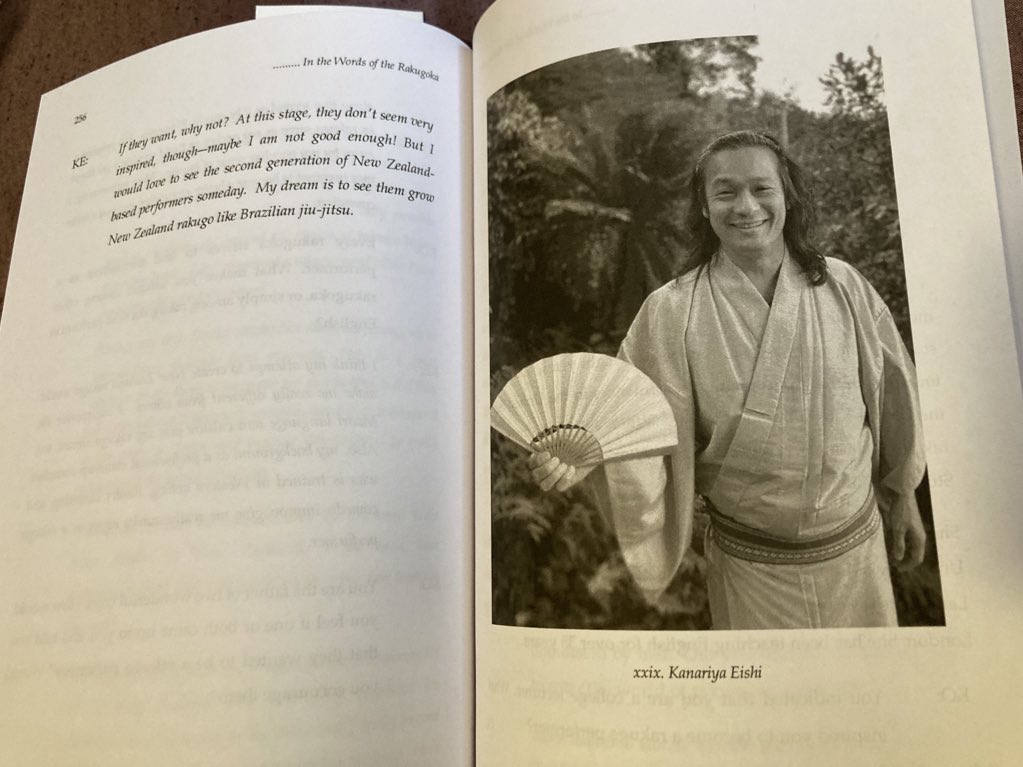
There is an interview of a lovely New Zealand-based performer called Kanariya Eishi, too.

Without any bias, I can confidently say that this is probably the best rakugo book that has ever been written in the English language.

I sincerely hope that this book will spread rakugo to the end of the world!

This is the beginning of a new chapter in English Rakugo.

You can purchase the book from here.