English Rakugo performer and actor based in NZ. A full-time rebel with common sense. A lover of art, books, comedy, Japanese culture/ language, music, peace, positivity, theatre, and trivia. Idealistic, but ain't no saint.
鹿鳴家英志(本名:中辻拓志)。ニュージーランドを拠点とする役者・英語落語パフォーマー。アメリカへの演劇留学をきっかけに、気付くと海外滞在20年。現在ニュージーランドに永住中。アメリカの4大卒業後は日本で英会話講師を経験、その後ニュージーランドの高校教師資格を取得する。ニュージーランドでは英語にてスタンダップコメディーを行い、2005年ニュージーランド国際コメディーフェスティバルの新人大会にて全国優勝を果たす。その後、テレビドラマ、CM等に出演、テレビのレポーターも勤める。
Here in New Zealand, Matariki (Māori New Year) is fast-approaching, and I am super excited to attend various events that are already being held throughout Auckland.
As Matariki symbolises a new beginning, I have decided to turn my life around as it hasn’t been super easy for the last few months… here’re some updates!
1. Change My Approach to Rakugo
I have to admit, I have been quite egotistical about my rakugo, and I haven’t asked my supporters what YOU want to see in my rakugo work.
Sure, it is one way of doing rakugo to be staunch about what I do, but it is not my style especially when rakugo hasn’t taken off as much as I want in New Zealand or the rest of the world (outside of Japan).
So it is time to listen to you!
Please do comment here or on one of my SNS so I can repent my self-centred approach to rakugo 😁 Your opinions matter to me!
As some of you know, I have been suffering from a frozen shoulder and nerve pains from a back injury that I had while travelling in Japan a few months ago. Thank you for your concern😊- I am getting better, but the huge problem is that… I cannot sit in the seiza position for longer than 15-20 minutes.
In order to do a public performance, I need to be able to do seiza for at least 60-75 minutes, but this is not possible at the moment.
So… I have decided to revive the channel as this is a form of expression that I can easily do even with my current restrictions.
Please follow my channel if you would like to support me. Just one click away!
3. Storytelling Group
As I mentioned in another post, one of my dreams has always been to produce storytelling performances curating stories from all over the world including my art, rakugo.
In the past, I’d had several attempts to do this, even involving my producer friend, but it never came true.
My current physical restrictions reminded me of this long-term dream, and this is something I’d like to make it happen soon!
4. Māori Learning
I have finally finished all the Māori courses at my Wānanga (Māori university)! This is just the beginning. My learning continues!
5. Online Shop
I have opened an online shop. If you are interested!
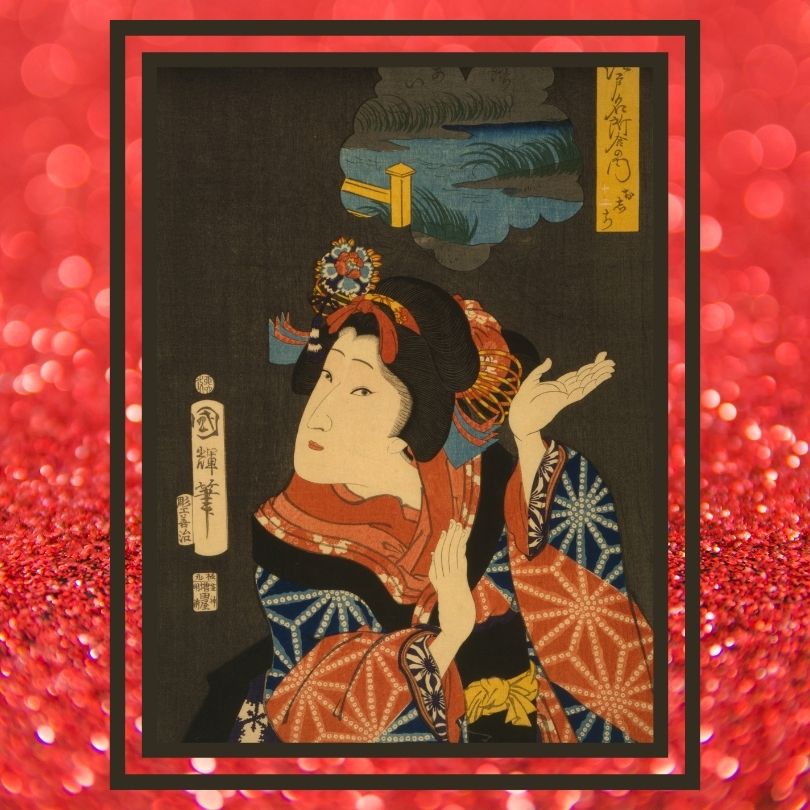
Yaoya Oshichi (八百屋お七 1667- 1683) is one of the Japanese historical figures who have been immortalised by many novels, kabuki/ bunraku plays, movies and songs including a book called ‘Kōshoku Gonin Onna’ (好色五人女) by the literary giant, Ihara Saikaku (井原 西鶴 1642-1693).
The title of this book translates as ‘Five Women Who Loved Love’. It is a compilation of 5 tragic love stories. I am captivated by this book and have deep respect and empathy for these women who chose love in the time when choosing true love wasn’t an option.
The story began during a great fire of Edo. Oshichi’s family escaped to Kichijo Temple, and they stayed there as a temporary shelter. There Oshichi fell in love with a temple worker called Kichizaburo.
Oshichi’s family house and business (greengrocer) were rebuilt, so they moved out of the temple.
These two lovers kept on kindling their love regardless of many obstacles.
However, one night, Oshichi missed Kichizaburo so much that she could no longer tolerate their circumstance.
As a fire had united them for the first place, she decided to cause another fire herself, hoping this would bring them together once again…
Fortunately, the fire was contained quickly.
Back then, arson resulted in death penalty, and the legal age to be convicted for arson was 16.
The judge was a kind man that he tried to save her by pretending that she was only 15:
“You must be 15 years old, are you not?” “No, I am 16 years old, Sir.”
Then, the judge asked her again:
“You must be 15 years old, are you not?”
Without picking up the hint, Oshichi answered, “I am 16 years old, Sir” once again.
Therefore, she was convicted and burnt at the stake.
Meanwhile, Kichizaburo had fallen sick and only learned about her death 100 days later.
Devastated by the passing of his love, he became a well-respected monk, and served the poor and even used his own money to build a bridge for the community.
In the world of rakugo, every performer has their own custom-printed tenugui or Japanese traditional towels, which act as business cards or ID’s.
Until this day, I still do not have my original tenugui, but as someone who performs rakugo in English, I wanted something very unconventional that can be used by myself or gifted to my supporters.
So I decided to design my own tote bag, which is the one in the picture above.
However…
I realised only after I had already designed Rakugo NZ Logo that the website required me to post 5 designs at least and officially open a shop in order to order items for myself…
So for the last few months, I have learned a bit about graphic design, copyright, etc. and created 4 extra designs so that I could finally get my own tote bag 😁
This is how this shop was born… rather randomly just like my own life.
Having said that, I’m hoping that this shop will promote the word “rakugo” in a fun way.
Click the photo at the top or below to visit the shop. Once on the page, click “shop all products” to see all available items.
If you like what you see in the shop, please spread the word!
One of my dreams has been to produce storytelling performances curating stories from all over the world including my art, rakugo.
This may sound like a massive dream, but the journey of a thousand miles got to begin with one step!
So, I was wondering if any of you would be interested in starting a very casual storytelling group where members share their stories or simply read picture books or passages from your favourite book or poetry?
If you are interested, please contact me via the contact page or one of my SNS (linked icons below).
If I get 2 or 3 people interested (as 1 on 1 would be a bit awkward…), we can meet at a cafe or a library somewhere in Auckland. I will book a space!
Here in Auckland, some parts of the city were flooded once again the day before yesterday, and last night we had a thunderstorm with hail where a lightning struck the Sky Tower. The temperature dropped nearly 10 degrees overnight, too.
My life isn’t as dramatic as the Auckland weather these days, but it’s definitely about time for an update on the rakugo front.
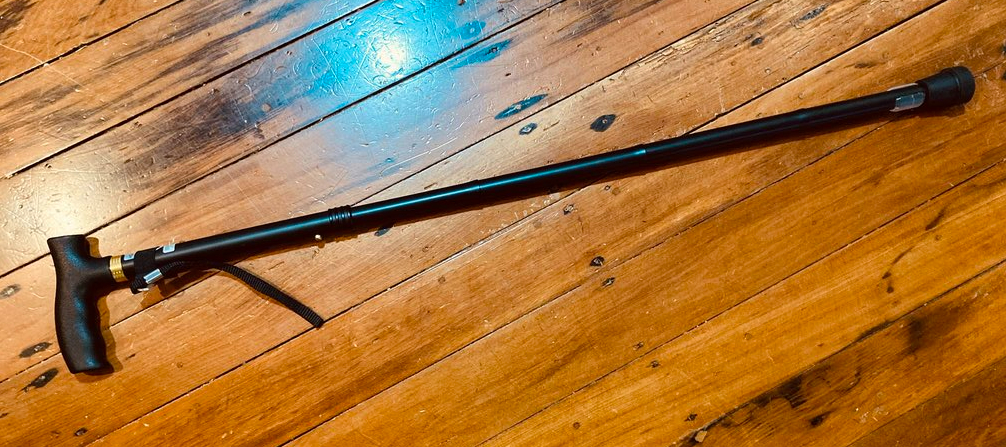
As some of you are aware, I have been struggling with a frozen shoulder for a while, but to make it more exciting, I injured my back during my recent trip to Japan. It was kind of exciting to buy my first walking stick, which I affectionately call ‘Mjölnir’, to waddle back to New Zealand.
It felt like being Yurakutei Yakumo if I let my inner anime geek shine through…
Fortunately, I don’t have to use the cane anymore, and I am steadily recovering.
However, the problem is that I still can only hold the seiza position up to only 20-30 minutes.
My usual solo performances run 60-90 minutes, so it is currently not possible to do a full-length performance.
So…
I am looking for groups, organisations or venues in Auckland to let me perform rakugo only up to 30 minutes maximum…
Do you know such people who would kindly invite me?
As it is my favour, I will not charge my usual fees, but I’m keen on performing for free (though petrol money would be appreciated).
I really need to get back to stage to polish my craft.
Please contact me via the contact page if you are interested. Thank you!
Another exciting news is that the rakugo-inspired installation art that Fiona Amundsen and I created will now be exhibited at Tampere Art Museum in Finland.
I’m quite impressed how far it will travel-16,606 km away from here according to Google!
Technically, they will probably build the screens locally over there, so I don’t think it will travel physically, though- so you know that it will not add to the carbon footprints 😁
The exhibition opens on 17 June 2023 and runs until 15 October 2023.
If you happen to be in Finland…
I have 2 Finnish friends, so I’m hoping at least 2 people would check it out. See you next time!









 English Rakugo NZ