Koizumi Yakumo and Nopperabo, the Faceless

If you’ve been following NHK’s hit TV drama Bakebake (The Ghost Writer’s Wife) like my parents, you already know how Japan’s rich tradition of ghost stories and folklore continues to captivate audiences nationwide. The drama, inspired by the life and works of Lafcadio Hearn (Koizumi Yakumo), has brought renewed attention to the eerie yet beautiful tales that shaped Japan’s cultural imagination.

For those unfamiliar with Hearn, he published Kwaidan: Stories and Studies of Strange Things in 1904, a remarkable compilation of Japanese ghost stories. Before its publication, these tales had been passed down locally in various regions of Japan, but this volume immortalised them and introduced them to the rest of the country- and eventually the world. Mind you, the book was first written in English and only later translated into Japanese.

Without Hearn’s work, stories like Hoichi the Earless (耳なし芳一), Yuki Onna (Snow Woman; 雪女), Rokurokkubi (a long‑necked yokai; ろくろ首), and Mujina (Japanese badger/raccoon dog; ムジナ) might never have reached us in their now‑familiar form.

Mujina is the creature that transforms into the famous yokai known as Nopperabo, on which the rakugo story Nopperabo is based. In that sense, this rakugo piece would not have been born without Hearn’s influence.

Hearn himself- a Greece‑born British citizen- married a Japanese woman named Setsu and became a naturalised Japanese citizen. Before that, he had been married to an African American woman during his time in the United States, despite interracial marriage being illegal at the time. He was a true revolutionary, someone who recognised the hypocrisy of the system and chose to follow his heart.

If you’d like to know more about Nopperabo, I also have a video of my rakugo performance.
How do Japanese celebrate the New Year?

During my recent visit to Japan, I got to experience the entire New Year celebrations with my family. It was the first time in at least a decade to go through the entire routine that I once did every single year until I left my homeland when I was 19.

I am sure there are local and family variations, but here is how it is generally celebrated in my area:

Towards the end of December

Year-end Cleaning: We clean the entire house towards the end of the year. It is like the spring cleaning in the west, but we do this in winter instead. This is based on the concept of ‘kiyome’ (清め) or ‘cleansing’ before welcoming the new year.

Osechi Making: Osechi is a traditional Japanese New Year feast, which is basically an elaborate bento. Each item has a special meaning, wishing for health, prosperity, and happiness in the coming year. Traditionally, it was pre-cooked before New Year’s Day so that the family members did not have to cook for the first few days of the year to relax.

31 December

Soba Noodle Eating: We eat soba noodles to wish for health and longevity. In some areas in Japan, they eat soba noodles on 1 January instead. The toppings also vary depending on the area. In my family, we do this ‘ritual’ towards midnight, sometime around 11:00 PM.

Kōhaku Uta Gassen: In the evening, many Japanese families watch the Red and White Singing Competition (Kōhaku Uta Gassen) on NHK, our national TV. It is basically a concert that showcases the best singers in Japan.

New Year’s Day

Shrine Visit: Families visit their local shrine to pray for good luck and health. Many families visit shrines in the first three days of the year (sanganichi; 三が日), but it is my family tradition to visit our local shrine at 12:00 AM midnight.

First Sunrise Gazing (初日の出): After a short sleep, we get up at the sunrise to pray to the sun. I’d say it is more cultural than religious, but it is said to be auspicious to gaze at the first sunrise of the year.

Breakfast: We eat the osechi that we prepared towards the end of the previous year. We also drink otoso, which is sake with some medicinal herbs, to pray for good health and well-being for the year. It tastes aweful, by the way!

New Year Cards: New Year Cards (Nengajou, 年賀状) start arriving around 10:00AM. The number of the New Year cards is an indicator of your popularity. As I grew up, I only received 20-30 cards while my dad received 500 plus. People are moving away from this custom these days, though. Many youths just email or text on LINE, which is like the Japanese version of WhatsApp.

Otoshidama (お年玉): If you are still a child or a teenager, you receive some pocket money in a little envelope called ‘pochi-bukuro’ (ポチ袋). As I grew up, my Kansai (Western Japan) relatives tended to give me more 😁

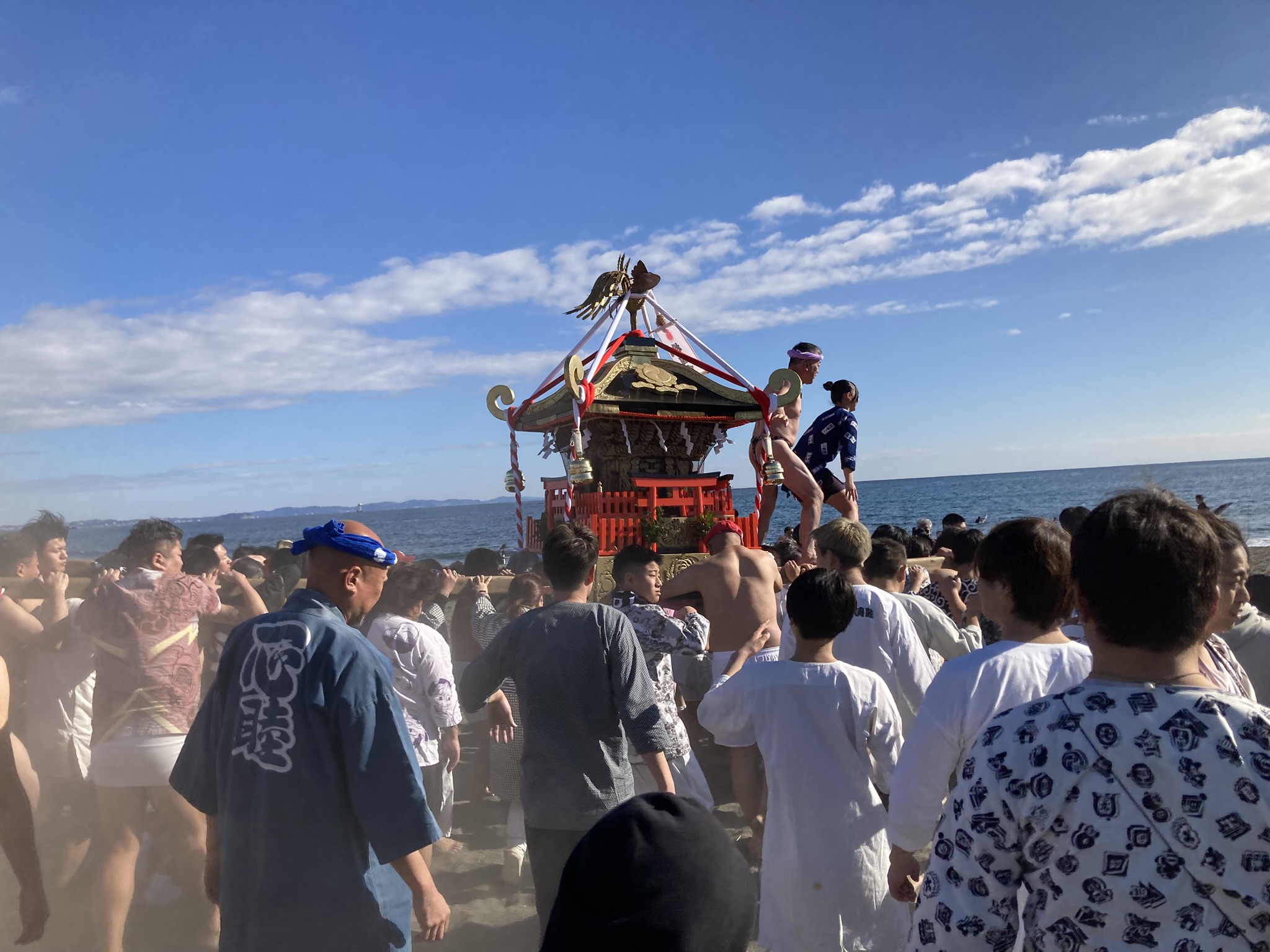
Community Celebrations: Depending on the area you live in, there might be some community celebrations. In my hometown, a mikoshi palanquin (a portable shrine) is taken into the sea to pray for the water safety for the year.

I have created a YouTube video about this subject, so if you are interested, please visit my YouTube channel. Make sure to subscribe if you still haven’t!

Happy New Year 2025!

Happy New Year! 新年あけましておめでとうございます!

Hope you had some good breaks during the Christmas and New Year holidays!

As a heavily Kiwi-fied person, I am finally kicking off my work year today after the 3 weeks of summer holidays… Perhaps, it is not appropriate to call it ‘summer holidays’ as I spent the most of it in the icy cold Japan. Anyway, I feel very stagnant, and it’s about time to get on with my creative projects!

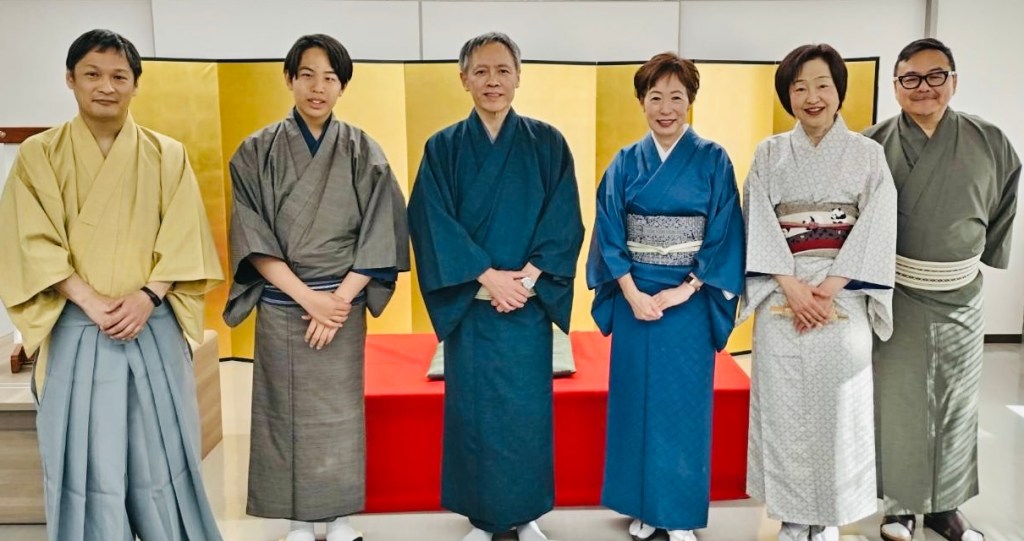
During my stay in Japan, I got to perform rakugo in English three times; twice at Asakusa Culture Tourist Information Center and once with my master’s rakugo family. It was especially a huge privilege for me to perform with my rakugo family, who are basically some of the top “English Rakugo” performers in Japan.

The photo above is from the performance with my rakugo family. (From the left, Eishi, Showman, Eiraku, Ichirin, Panda, and Koraku). Eiraku (my master), Ichirin, and Koraku are the founders of the English Rakugo Association.

There are some exciting projects coming in, but one of the biggest news so far is that the rakugo-inspired artwork that was exhibited at Christchurch Art Gallery (New Zealand) and Tampere Art Museum (Finland) will be displayed at an art museum in Hiroshima, Japan! More information to follow. (If you are interested in this art project, you can read my past entry here.)

I will also resume school visits if my funding application is approved. I will probably be able to offer 5-10 free performance-workshops. Keep an eye out for this page and/ or my SNS.

There will be an open performance/ workshop at Epsom Library on Saturday, 5 April 2025 as a part of the World of Cultures celebrations.

Also, I am planning to stay in Japan for a longer period at the end of this year, and I would like to expand my performance opportunities there. Please contact me if you are interested in collaborating with me sometime between November 2025- January 2026 in Japan.

Finally, though I have said this over and over… I really want to make my YouTube work this year! Please follow my channel if you still haven’t and also give me suggestions to make it work.

Have a fantastic year, everybody!

Goodbye Twitter!

After long thought, I have finally decided to say goodbye to my favourite SNS, Twitter… or whatever you call it.

I was a big Twitter fan and used it as my main SNS platform since the early days of my English Rakugo career in New Zealand. It was there that I met many invaluable friends who have inspired and encouraged me to carry on this rather lonely journey. For this, I am eternally thankful to you all!

This decision was made largely due to the new owner of the platform and the increasingly divisive contents that people post on the once-friendlier space (I am also guilty of occasionally posting progressive left posts myself, though! 😁).

So… Threads, Instagram, and Facebook will be my SNS platforms from now on. I like the Twitter format, so Threads will probably be my main platform. Sorry Mastodon, I’ve tried, but I still don’t know how it works…