
Kia ora everyone- I’m finally back in New Zealand!
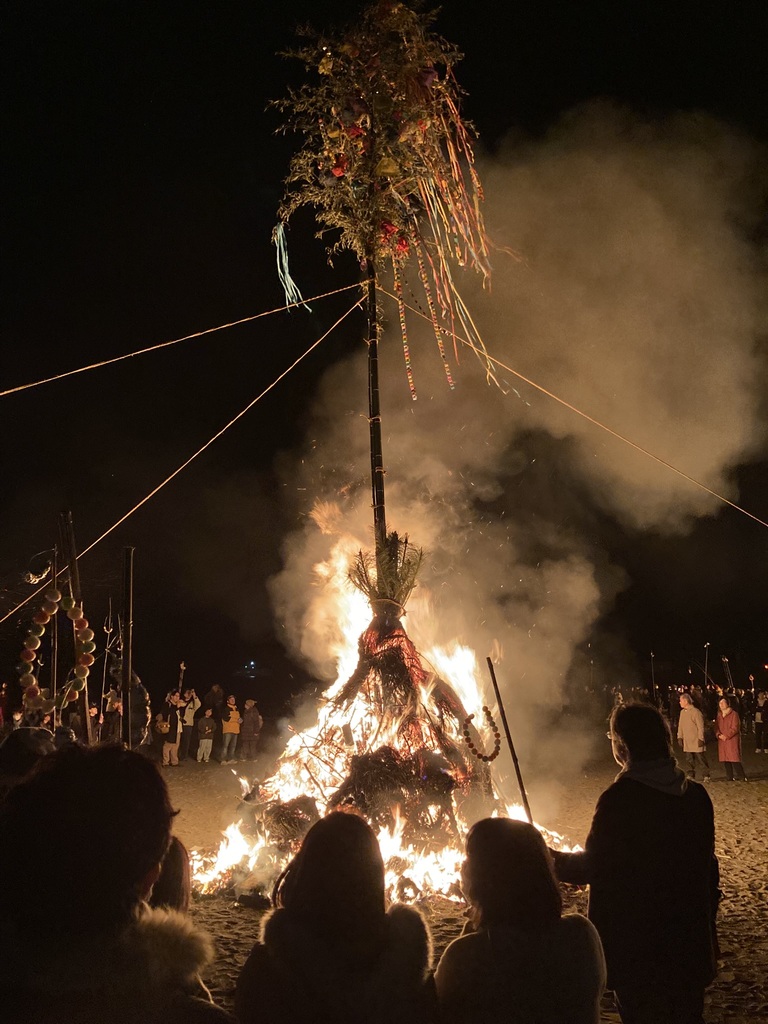
Earlier this month, I was lucky enough to celebrate Sagicho (左義長) while I was visiting my hometown, Oiso (大磯), Japan, and the whole experience felt both nostalgic and grounding!
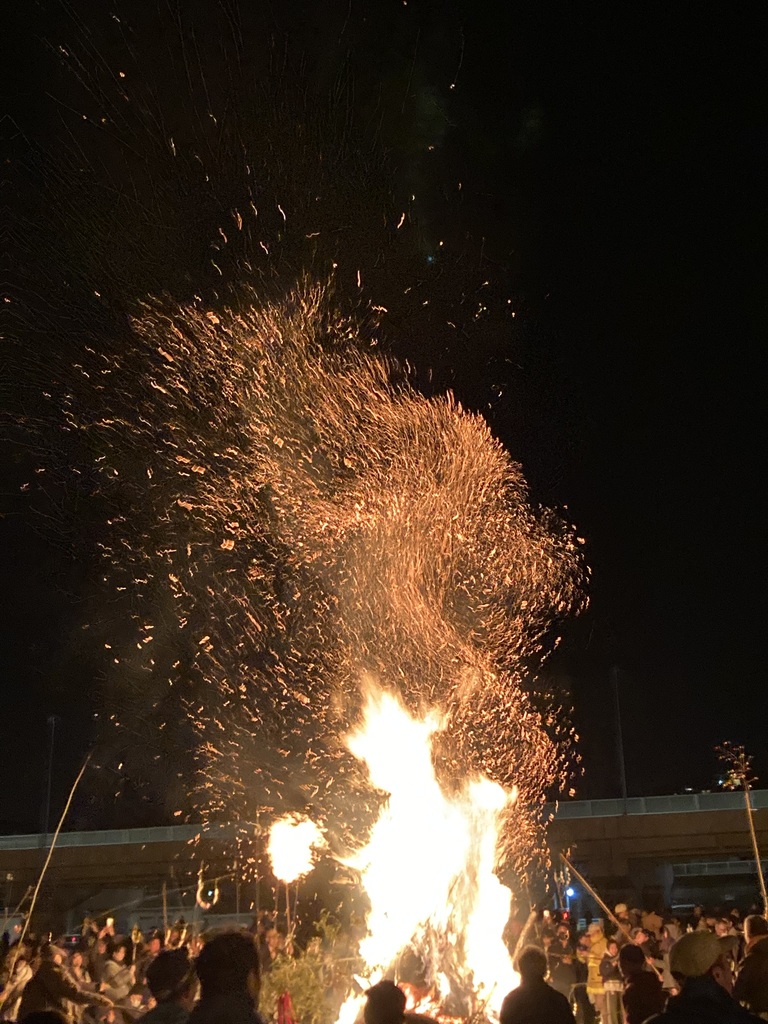
The crackling of the bonfire, the scent of pine drifting through the freezing air, and the sight of everyone gathering to send off the New Year decorations and lucky charms from the previous year reminded me of how deeply these traditions shape the rhythm of the community.
Watching the flames rise against the winter sky made me feel connected to something timeless, and it was a beautiful reminder of why coming home always means so much to me.
This gorgeous fire festival, held in the Kitahama (北浜: ‘North Beach’) area of Oiso, is a National Intangible Cultural Heritage. It is celebrated to pray for the safety of one’s family and the health of the community (and also for a better handwriting if you were a calligrapher).
The Journey Begins: Ichiban Musuko (一番息子)
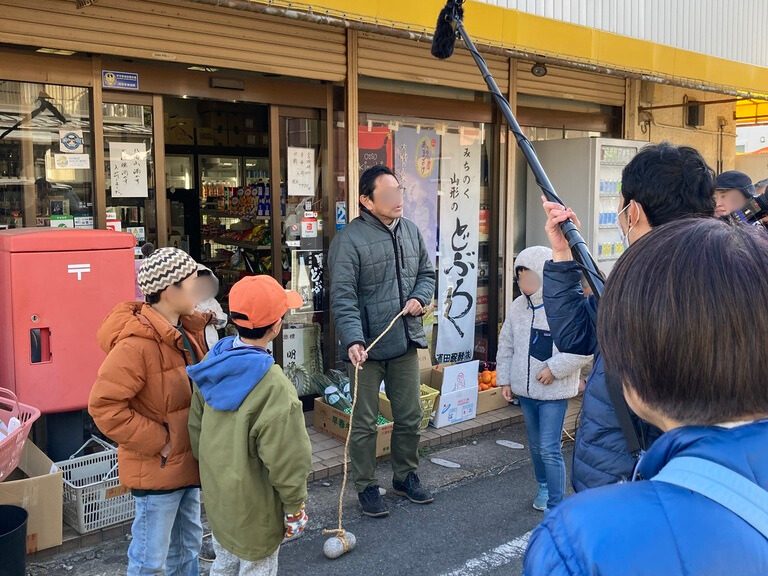
Though the bon fire part of the festival is held in January, the spirit of the festival begins much earlier. In early December, an event called Ichiban Musuko (一番息子; literally means ‘The First Son’) marks the start of the New Year season.
Local children go from house to house carrying Goro-ishi (ゴロ石)– a stone tied with a rope made of hay, which is offered to the local deity Saenokamisan (サエノカミサン) to pray for the healthy growth of boys.
As they move through the neighbourhood, the children chant wishes for the residents, such as praying for good health and marriage, and receive small monetary offerings. With this money, the children buy and eat tofu to ward off evil spirits and to ensure they don’t catch colds. This tradition is linked to the legend of Yaobikuni (八百比丘尼; also know as Happyaku Bikuni), a nun who lived 800 years by eating mermaid’s flesh- obviously, its texture is similar to the one of tofu!
The Spectacle of Seetobaree (セエトバレエ)
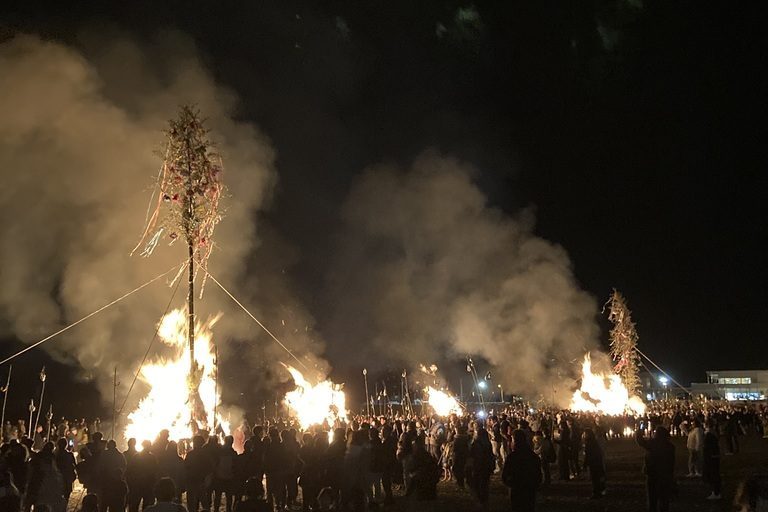
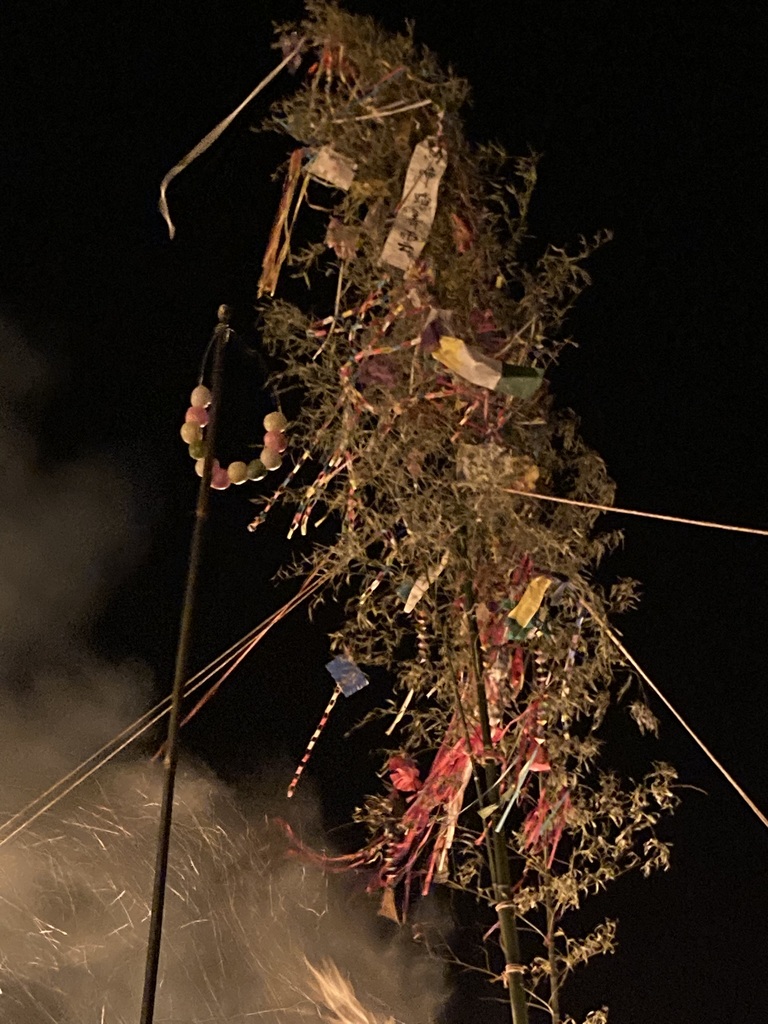
The main event, known as Seetobaree*, takes place on the beach where nine massive structures as in the picture above are erected. These towers reach heights of 13-14 meters. They are intricately decorated with:
- Onbe-dake (The bamboo in the middle)
- Dharma dolls and lucky charms from the previous year
- New Year’s calligraphy (Kakizome)
Around 6:30 in the evening, the towers are lit simultaneously from the “lucky direction” (Ehō; 恵方) of that year. As the flames reach toward the sky, participants roast dango dumplings on long bamboo poles in the fires.
* In my part of Oiso, it was called Dondoyaki (どんど焼き).
Yannagokko (ヤンナゴッコ)
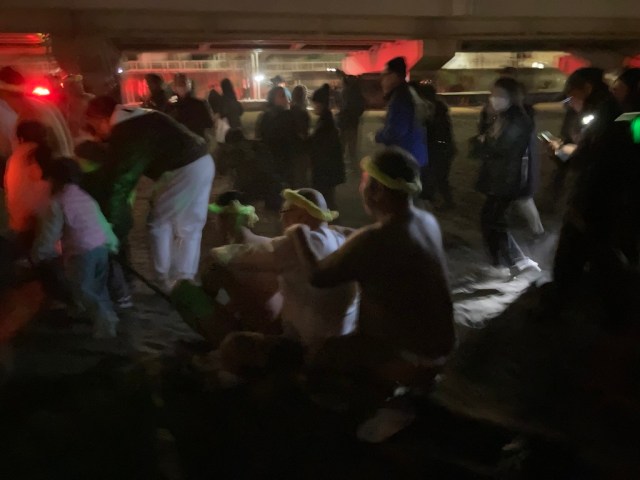
As the bamboo towers begin to burn and fall, the festival reaches its most exciting phase: Yannagokko (ヤンナゴッコ). Young men dressed only in loincloths (fundoshi) gather from different districts to engage in a fierce ritual. They chant the Yanna Ondo (ヤンナ音頭) while performing a tug-of-war with a sled-mounted temporary shrine (Kari-miya; 仮宮) with evil spirits trapped inside. By pulling this shrine into the sea three times, the community symbolically drives away the spirits of plague and bad luck. The shrine is destroyed during this ritual.
It was my first time seeing this ritual, but honestly, it looks like a few half‑naked men in loincloths being dragged on a sled- quite a comical sight, even if it’s probably not meant to be 😁.
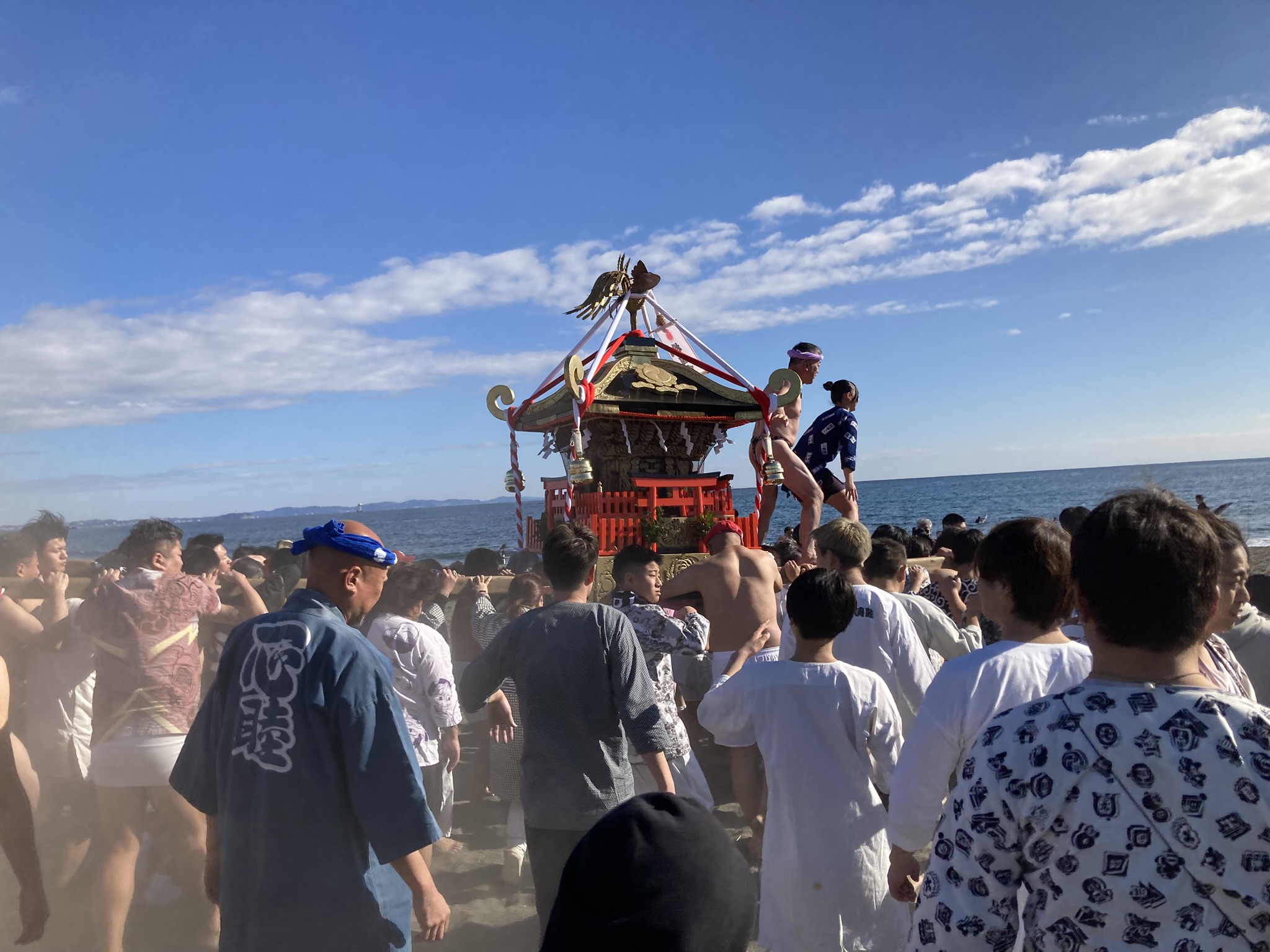


 English Rakugo NZ