Last night, I listened to a rakugo story called “Daimaruya Soudou” (大丸屋騒動 だいまるやそうどう) based on a real murder case that took place in 1773.
It is unusual for a murder to become the theme of a rakugo story, so I was quite fascinated by this tragedy.
I will not write about the details of this case, but if you are interested and understand Japanese, you can find more information here.
Though it is not clear what kind of sword was actually used as the murder weapon, in the rakugo version, it says that a sword called Muramasa was used.
If you ask any Japanese person what the most famous sword would be, they are likely to answer either Masamune or Muramasa.
You see a lot of references to these two swords in Japanese literature, movies, and even manga/ anime.
Masamune is often described as a sword that protects while Muramasa is a sword that harms and kills.
Muramasa to most Japanese people is a “cursed sword”.
Muramasa got a bad reputation as Tokugawa Ieyasu (1543- 1616), the founder of the Tokugawa Shogunate, was said to have lost his grandfather and eldest son by this sword.
Make sure to do at least one thing that excites you today!
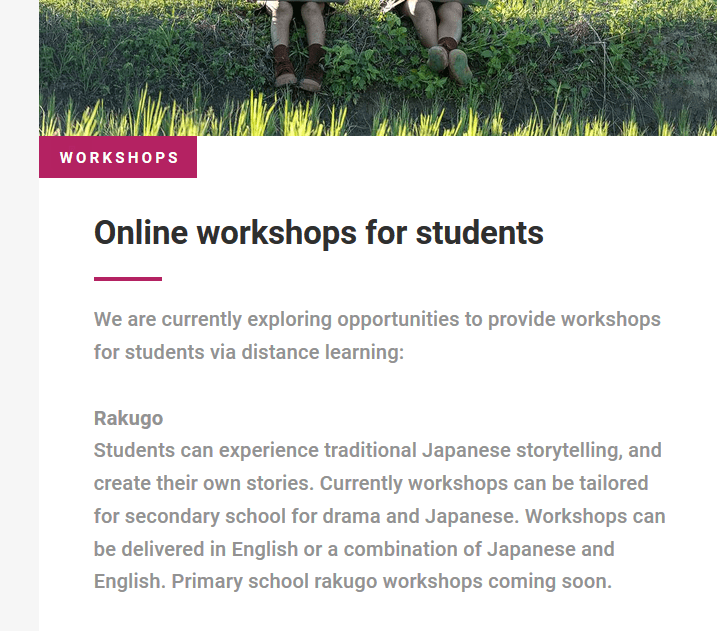
As some of you may know, I was just about to partner up with the Asia New Zealand Foundation and start visiting Auckland high schools to deliver rakugo workshops before “Rona” hit New Zealand.
Just as many of my friends in the performing arts industry, I lost literally ALL the opportunities due to the situation the world is facing right now.
Including this partnership.
So I thought.
But, I was completely wrong!!!
A few days ago, I received an e-mail from them, asking me if I would be interested in delivering online workshops for housebound high school students!!!
Of course, I said yes!!!
Thank you so much, Asian New Zealand Foundation!!! You are AMAZING!!!
Here’s the proof 🙂
But there was an issue, though. I didn’t have a filming space…
I would’ve gone to a studio or a creative space somewhere to film learning resources, but I don’t have that luxury at the moment. I don’t have much privacy, either, as my kids are roaming all over the place… literally.
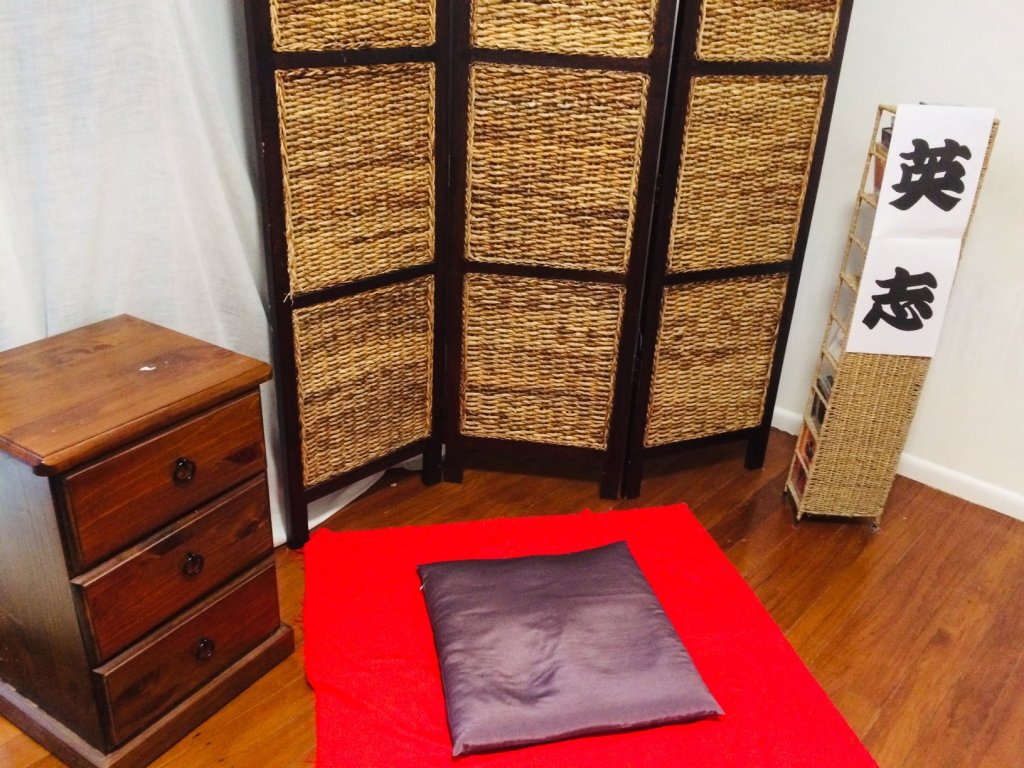
So I decided to make a part of the master bedroom into my semi-permanent recording space and named it the “Rakugo Rebel Studio”!!!
To block noises from the little cacophony artists, the “studio” will be barricaded with bed mattresses and futon as sound barriers during recordings.
We have decided to keep it until the new world begins i.e. Rona leaves us alone (my apology if your name happen to be Rona).
I will use this space to film the learning resources and possibly do live streaming sessions. Maybe I will film some YouTube videos, too!
Let’s keep on doing what we can for a better world!!!
As usual, here’s another quirky history lesson that you might enjoy.
It is about one of the founders of rakugo, the Japanese traditional art of comic storytelling.
Before moving onto the story of a talking horse, here’s a little history lesson for you.
The rakugo tradition began at Seigan Temple (誓願寺 せいがんじ) in Kyoto.
The head monk of this temple, Anrakuan Sakuden (安楽庵策伝 あんらくあんさくでん, 1554-1642), was a well-known raconteur of the day.
He compiled a joke book called “Seisuishou” (醒酔笑 せいすいしょう) with over 1,000 kobanashi (小噺 こばなし) or short stories. This 8-book series was published in 1623.
It is generally agreed that he was the founder of rakugo.
Then, this art was introduced to Osaka and initially developed as a form of street performance, incorporating lively music and wooden blocks (used like slapsticks) to get the attention of the passerby.
In Edo/ Tokyo, rakugo developed mainly as an “indoor art” that was performed in dedicated yose or rakugo theatres and zashiki or Japanese traditional rooms with tatami mattresses, paper screens, etc.
The founder of Edo Rakugo was Shikano Buzaemon (鹿野武左衛門 しかのぶざえもん).
He is the hero of the sad story I’m about to tell you.
In 1693, cholera was widespread in Japan and claimed many people’s lives.
In this national emergency, a ronin (a samurai without his master) and a greengrocer plotted a scam to get money off innocent people.
They tried to carry out their cunning plan by telling people a story something like this:
There once was a talking horse.
One day, this wise horse prophesied that nandinaand Japanese plums will protect you from the plague!
We happened to have a lot of those!
Buy one, get one free!
It’s a very timely story right now, but as you can see it was not a very believable scheme.
Soon they got arrested, and the ronin was executed, and the greengrocer was sent to a remote island.
Now, these criminals confessed that they got the idea of a talking horse from Shikano Buzaemon’s book…
For this reason, he was also sent to Izu Ohshima Island (伊豆大島 いずおおしま) and died there…
What a terrible end for someone who established rakugo in Edo!!!
Rakugo performers have to be careful about what kind of stories they tell…
Hope you enjoyed this little history lesson!
If you did, please follow my YouTube channel as well.
Even though I have been sharing these stories here, my real intention is to make them into videos like the ones below.
I unfortunately can’t produce videos during the lockdown because I have my little imps aka kids hovering all over the place…
It’s only a click away to help my rakugo career. Thank you very much for your continued support!!!
I have decided to write a blog article everyday at least until the end of the lockdown, so here is another one!!!
During the Edo period (1603-1868), the society was very male-dominant in Japan, and nearly all women were completely dependent on their husbands.
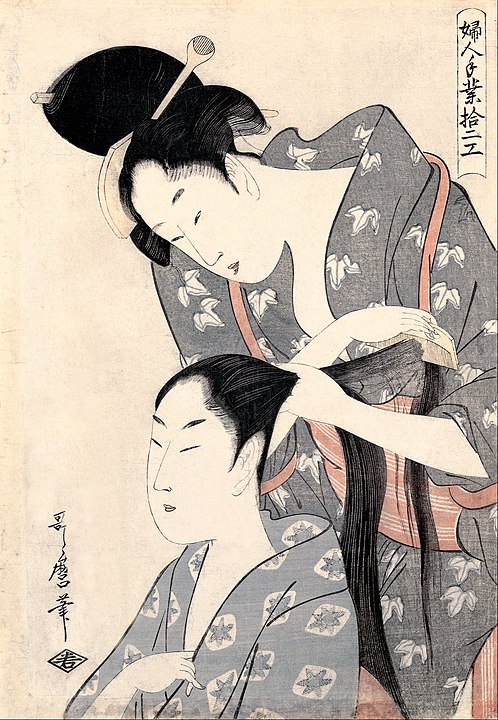
However, there was definitely one option that enabled women to make a full-time living without relying on their… ahem… lousy husbands. It was the art of hairdressing or kamiyui (かみゆい 髪結).
They of course cut their clients’ hair, but styling was a big part of their job as people of Edo often had rather complex hairstyles 🙂
Their top clients were courtesans at red light districts, and they also visited individual homes to provide their hairdressing services.
Because of the complicated hairdos people had, hairdressers were in high demand, so women in this profession made a good living.
Because of this, the expression “hairdresser’s husband” (かみゆいのていしゅ 髪結の亭主) was born. As you can guess, it meant a man who was financially dependent on his wife/ partner.
In my opinion, female hairdressers were the feminist heroes of Edo!
Actually… Himiko, the first leader of Japan was a woman, but let’s save this topic for another post.
After posting an article called “The Origin of ‘Kiseru’/ Japanese Pipe”, my rakugo club friend asked me how in the world it was possible for Japanese to trade with Laotians during the Edo period.
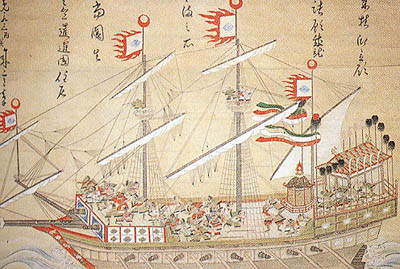
Japan began trading with Portugal in 1543, which was before the Edo period started, and Portugal had already had a strong foothold in South East Asia. So my initial guess was that it could’ve been through the Portuguese.
I don’t know if my assumption was right, but it was a possibility. Japan also traded with China, so it could’ve been through them as well.
Then, I remembered that the Ayutthaya Japanese Village (アユタヤ日本人町) in the present day Thailand had already existed. In fact, Japanese started migrating to Thailand as early as the mid-14th century!!! So it could’ve been through them 🙂
It is said that 1,000-1,500 Japanese lived in the tiny village (570m x 230m) during its heyday.
Now the leader of this village was a samurai warrior called Yamada Nagamasa (1590-1630). He was a great leader and well trusted by the Ayutthayan authorities, and he eventually became the governor of Nakhon Si Thammarat Province !!!
I learned from a TV documentary that he was given a Thai name and completely treated as a local, so some people didn’t even know he was actually a Japanese!!!
Hi all, Eishi here!!! Hope you are having a fantastic day!!!
This morning I was doing a little research for my rakugo and encountered a very interesting trivia so decided to share it here 🙂
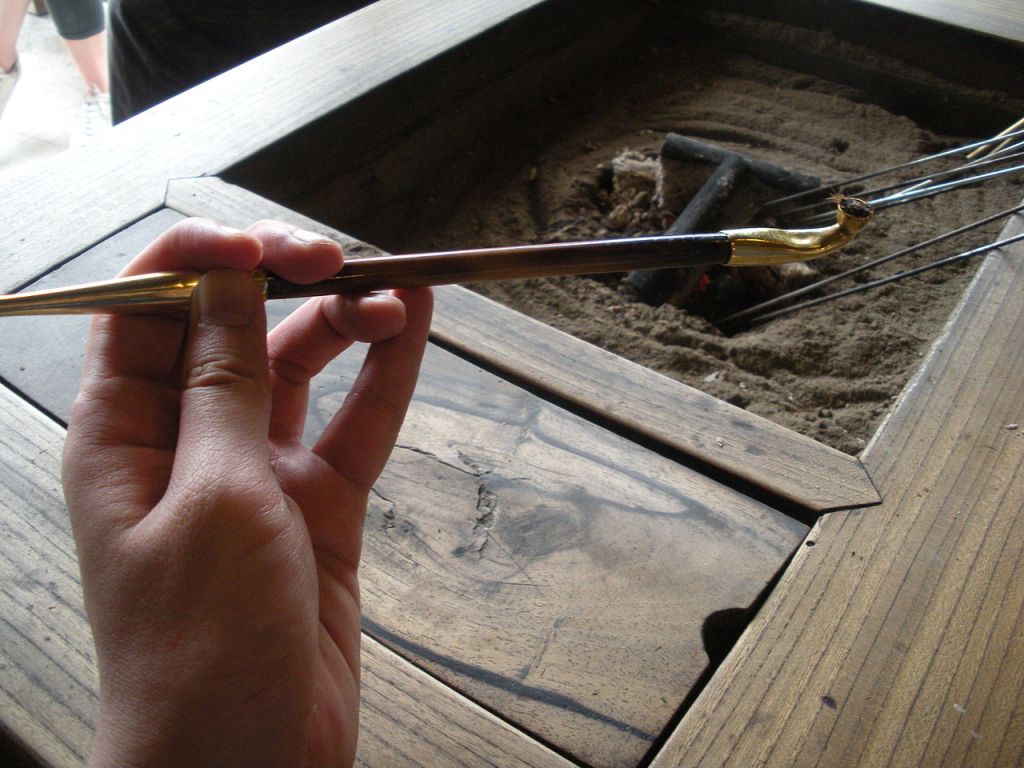
Have you ever seen traditional Japanese pipes before?
They look like the one in the photo above, and they are called “kiseru” (キセル). They were already in use in Japan in early 17th century.
It is usually spelled in the katakana writing system, which suggests that it is a foreign word, but I’d never thought it actually was… until today!!!
As it can also be written in kanji or Chinese characters (“煙管”: 煙=smoke; 管=pipe, tube), I had never doubted that it was a uniquely Japanese word.
I was completely wrong!!!
First of all, a Japanese pipe can be broken down into 3 different parts.
The metal tip where you put shredded tobacco is called “gankubi” (がんくび 雁首), which literally means “goose neck”. (* Technically, the very tip of gankubi where tobacco is put is called hizara or “fire dish”.)
The middle part, which is usually made of bamboo, is called “rao” or “rau” (らう 羅宇).
The metal mouth piece is called “suikuchi” (すいくち 吸い口).
Now, the words gankubi and suikuchi make sense as Japanese, but rao doesn’t.
Rao is actually from “Raosu” (Laos) as bamboo for Japanese pipes were often sourced from Laos.
So…
I have learned that the word kiseru itself is from the Laotian language!






 English Rakugo NZ