Koizumi Yakumo and Nopperabo, the Faceless

If you’ve been following NHK’s hit TV drama Bakebake (The Ghost Writer’s Wife) like my parents, you already know how Japan’s rich tradition of ghost stories and folklore continues to captivate audiences nationwide. The drama, inspired by the life and works of Lafcadio Hearn (Koizumi Yakumo), has brought renewed attention to the eerie yet beautiful tales that shaped Japan’s cultural imagination.

For those unfamiliar with Hearn, he published Kwaidan: Stories and Studies of Strange Things in 1904, a remarkable compilation of Japanese ghost stories. Before its publication, these tales had been passed down locally in various regions of Japan, but this volume immortalised them and introduced them to the rest of the country- and eventually the world. Mind you, the book was first written in English and only later translated into Japanese.

Without Hearn’s work, stories like Hoichi the Earless (耳なし芳一), Yuki Onna (Snow Woman; 雪女), Rokurokkubi (a long‑necked yokai; ろくろ首), and Mujina (Japanese badger/raccoon dog; ムジナ) might never have reached us in their now‑familiar form.

Mujina is the creature that transforms into the famous yokai known as Nopperabo, on which the rakugo story Nopperabo is based. In that sense, this rakugo piece would not have been born without Hearn’s influence.

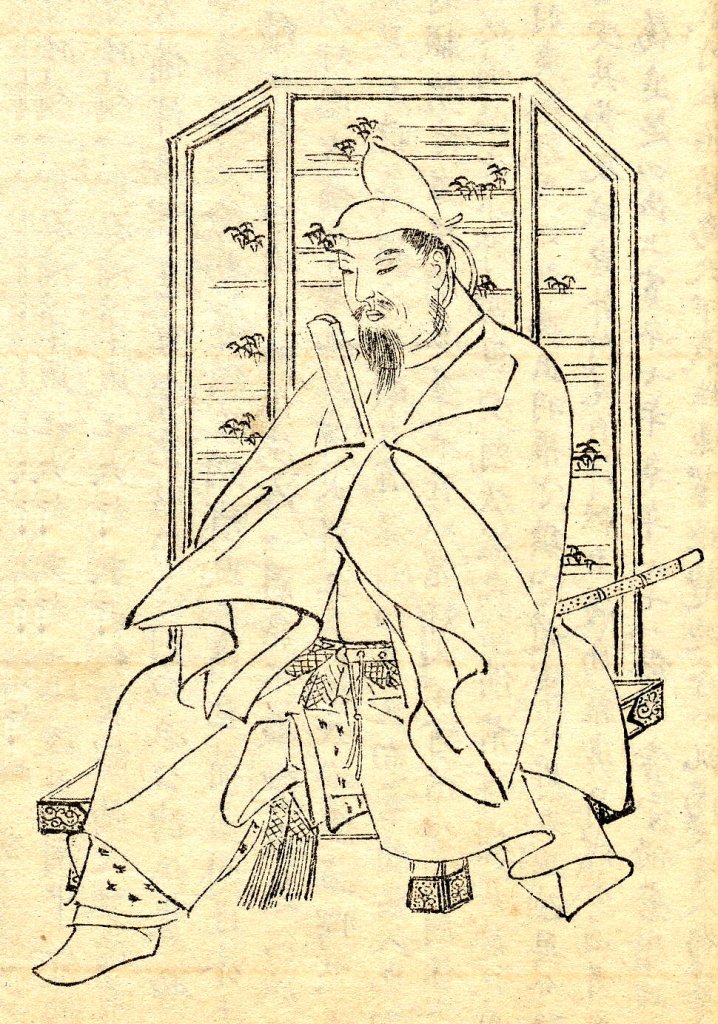
Hearn himself- a Greece‑born British citizen- married a Japanese woman named Setsu and became a naturalised Japanese citizen. Before that, he had been married to an African American woman during his time in the United States, despite interracial marriage being illegal at the time. He was a true revolutionary, someone who recognised the hypocrisy of the system and chose to follow his heart.

If you’d like to know more about Nopperabo, I also have a video of my rakugo performance.

Uncover the Magic of Rakugo: A Beginner’s Guide to Japanese Comic Storytelling

Happy Lunar New Year! Wishing you and your family peace, happiness, and good fortune!

To celebrate this special occasion, I have decided to write a beginner’s guide to rakugo. It is based on an introduction video that I made for YouTube, but I thought a note that accompanies it would be good addition for you to deepen your understanding of rakugo 😊 So…

Have you ever stumbled upon this storytelling tradition that’s both ancient and strikingly modern? Enter the world of rakugo, the Japanese traditional art of comic storytelling that blends storytelling with theatrical flair. It’s more than just comedy; it’s a window into Japanese culture and a testament to the power of narrative (I dare say!). Hopefully, this guide will introduce you to the unique and exciting world of rakugo!

What Exactly is Rakugo?

At its heart, rakugo is a 400-year-old Japanese tradition of comic storytelling. While you might initially think that it might be like stand-up comedy performed sitting down, but it is actually quite different. It’s a form of narrative performance where the goal is to engage and captivate the audience, not just make them laugh. Rakugo stories can be incredibly diverse, ranging from lighthearted ghost stories and tragedies to fantastical tales, erotica, and even science fiction. I personally see it like a sitcom or an old-time radio show, delivered by a single storyteller.

Key Elements that Make Rakugo Unique

  • Traditional Meets Contemporary: Rakugo is both traditional and contemporary. Performers almost always wear kimono, honoring the traditions of the past, but the stories themselves can explore themes of the present and even the future.
  • Minimalist Staging: In the Tokyo (Edo) style of rakugo, performers use only two props: a fan and a tenugui (traditional Japanese towel). The fan, also known as ‘kaze’ (literally means ‘wind’) in rakugo circles, can be used to create sound effects or symbolise various objects like a calligraphy pen or chopsticks. The tenugui, also referred to as ‘mandala’, is a highly versatile prop that can represent anything from a book to a wallet or even a smartphone!

The Art of the Single Performer

Rakugo is performed by a single storyteller who takes on all the characters within the narrative. Very subtle head movements and shifts in gaze are used to differentiate between each character. The performer’s direction of gaze also indicates social status and whether they are indoors or outdoors.

  • Characters with higher social status are indicated by the performer looking stage right, while those of lower status are indicated by looking stage left.
  • Characters inside a building are indicated by the performer facing stage right while those outside always face towards stage left regardless of the character’s social status.

The Historical Roots of Rakugo

The origin of Rakugo is often traced back to Seigan Temple (誓願寺) in Kyoto. It’s said that a monk named Anrakuan Sakuden (1554-1642) began incorporating characters and anecdotes into his Buddhist sermons to keep his students engaged. His approach was a means of enlivening what might otherwise be considered dry religious teachings. He compiled a book called Seisuishou (醒酔笑) in 1623, marking a significant milestone in the history of rakugo.

Rakugo further developed in two major Japanese cities with regional differences:

  • Osaka/ Kyoto: Rakugo initially evolved as a lively street performance, incorporating music and sound effects.
  • Edo (Tokyo): In Tokyo, rakugo became more of a theatrical performance, focusing on the art of storytelling with minimal props.

Why Should You Experience Rakugo?

Rakugo is a unique experience, far removed from the typical Western theatrical fare. It’s not just a performance; it’s a cultural memory that blends storytelling, minimalist performance, and a connection to Japan’s history. Whether you’re seeking a different kind of comedy or an enriching cultural experience, rakugo offers a journey into a world that is both familiar and wonderfully unique… and sometimes VERY quirky!

If you prefer just watching the video… (maybe I should’ve put the video above, but hey I wanted you to read the article!)

Eishi’s Rakugo Commentary No.4 [A New Year Visit to the Shrine 初天神]

Traditional Japanese Kites

Hatsutenjin (初天神) or “A New Year Visit to the Shrine”* or even more precisely “A New Year Visit to Tenjin Shrine” is one of the most widely performed rakugo stories in Japan.

As the title suggests, it is a story about a New Year visit to a shrine where Tenjin (天神) is enshrined, and it is considered an auspicious story and often performed in January.

Tenjin is the god of learning, but he was an actual historical figure called Sugawara no Michizane (菅原道真 845-903 AD) before enshrined.

Michizane was a scholar, politician, and poet of the Heian period (平安時代 794-1185). He was enshrined as a god because of his immense contribution to the academia.

Tenjin Shrine or Tenmangu is where Michizane is enshrined, and shrines all over Japan enshrine him as their patron god. Among them, Dazaifu Tenmangu, Osaka Tenmangu, Kitano Tenmangu, and Kameido Tenjin Shrine are particularly famous.

Sugawara no Michizane (菅原 道真 845-903 AD)

Hastutenjin was originally a Kamigata Rakugo** created by Shofukutei Shochiku (松富久亭松竹 DOB/ DOD unknown), the founding father of the Shofukutei (笑福亭) clan. It was exported to Tokyo by Sanyutei Enba III (三代目三遊亭圓馬 1882-1945).

Having said that…

this story is almost nothing to do with Tenjin Shrine itself, but it’s a simple lighthearted story about a relationship between a father and his son.

You can watch the story at the bottom of this post, but here is what dango looks like.

Dango

Hope you will enjoy the story!!!

* You might have noticed that my YouTube thumbnail says “The First Visit to Tenjin Shrine”, but it is mistranslated. The official translation by my master Kanariya Eiraku is “A New Year Visit to the Shrine”, but I also presented a more literal translation “A New Year Visit to Tenjin Shrine” for educational purposes.

** Rakugo from the Kansai region especially from Osaka and Kyoto

Photos Credit

Japanese Kites: Momotarou2012, CC BY-SA 3.0 https://creativecommons.org/licenses/by-sa/3.0, via Wikimedia Commons

Reference

落語手帖 矢野誠一

Eishi’s Rakugo Commentary No.3 [Nopperabo のっぺらぼう]

[You can watch this rakugo story at the bottom of this post. Please let me know what you think of it!!!]

In my personal opinion, this is one of the uniquest rakugo stories of all.

This is not because it is a pure ghost story with very little laughter but mainly because it was inspired by a story written by Lafcadio Hearn or better known in Japan as Koizumi Yakumo (小泉 八雲 1850-1904).

The story of Nopperabo had already existed as folktales before his writing, but it was him who made it famous.

In 1850, Patrick Lafcadio Hearn was born in Greece to a Greek mother and an Irish father. Due to family complications, he moved to Dublin and then to the United States where he worked as a newspaper reporter.

As a correspondent, he was sent to French West Indies for 2 years, and then finally ended up in Japan where he spent the rest of his life.

He got married with a Japanese woman and became a Japanese citizen himself.

He is the reason why I am so attached to this story.

Someone from overseas bothered enough to learn, live, and love the Japanese way, and he shared his learning with the west and ended his life as a Japanese citizen.

I feel so closely to this man perhaps because I am in a little similar situation myself as someone who has spent more than half of his life overseas and married to a non-Japanese woman.

Whenever I perform this story, I think of him, and I feel immensely honoured to carry on with his story.

Going back to the story itself, it had already existed as I mentioned earlier.

There is a mention about Nopperabo in Sorori Monogatari (曽呂利物語 そろりものがたり) in 1663.

The fascinating thing about this particular Nopperabo is that he was over 2m tall!!!

In general, people believed that animals such as foxes, racoon dogs, or mujina (Japanese badgers) turned into Nopperabo and tricked humans.

In Koizumi’s version, the culprit was a mujina.

You can read the original story here on The Project Gutenberg website. As you can see, the term “Nopperabo” is somehow not used in his story.

Now you can watch Nopperabo below and see how the original evolved into a rakugo story.

References

のっぺらぼう

Lafcadio Hearn

Eishi’s Rakugo Commentary No.2 [Jugemu 寿限無]

[The recording of this story is at the bottom of this post.]

Jugemu (寿限無) probably is one of the best-known rakugo stories in Japan along with Time Noodles (時そば) and Scary Manju (まんじゅうこわい).

It is also one of my favourite stories to perform for people who are new to rakugo.

This tale is about this Japanese boy who had an unnecessarily long name, which would cause all sorts of problems. I am very glad that my name is NOT…

Jugemu jugemu
Gokouno surikire
Kaijari suigyono
Suigyoumatsu unraimatsu furaimatsu
Kuneru tokoroni sumutokoro
Yaburakoujino burakouji
Paipo paipo paipono shuringan
Shuringan no gurindai
Gurindai no ponpokopi no ponpokona no
Chokyumei no chosuke

(*There are some different variations.)

The exact origin of this story is unclear as its basic structure appears in many books and folktales.

The prototype of this story is found in Shasekishu (沙石集) or “Sand and Pebbles”, which was a collection of Buddhist parables compiled by a monk called Muju (無住) in 1283.

It was widespread, and the same concept can be found in Kyogen and a traditional lullaby from Shinano Azumigouri Yamato Village (信濃安曇郡倭村).

One of the scary variations I have heard of before is that Jugemu drowns because his name was a bit too long…

Just like the original Grimms’ Fairy Tales, some stories became un-PC, so they have been rewritten over time as rakugo is not only a traditional art but a popular art at the same time.

(My Jugemu might be more appropriate to be called “New Zealand Jugemu”! 😁)

References

落語手帖 矢野誠一

沙石集

Eishi’s Rakugo Commentary No.1 [Chotan 長短]

[The video is at the bottom.]

Hi there, how are you doing? Hope everything is well with you 🙂

As a part of my Online Rakugo Project, I have just decided to write commentaries about my stories so that you can understand and enjoy them better.

I am also secretly hoping that it would increase viewership magically.

I will be talking about the origins of the stories, techniques, and other trivia.

The first up is “Chotan” (長短) or “Long-Tempered vs. Short-Tempered”.

It is said that this story is based on “Wakan Rikutsu Monogatari” (和漢理屈物語), which was published in 1667.

This title, by the way, roughly translates as “Logical Tales from Japan and China”, but I have no idea what is so logical about it…

As the title suggests, the concept of “Chotan” originated in China, and the same story is found in “Xiao Fu” (笑府: Pronounced “Shouhu” in Japanese) written by Feng Menglong (1574–1646).

So this is actually a Chinese story if we go all the way back.

The premise of this rakugo is what would happen if someone with the shortest-temper becomes the best friend with someone who is extremely laid-back.

I was told by my master that this story is performed with face.

So… pay attention to my facial expressions to enjoy this story!

Feel free to ask me questions in the comment section below.

REFERENCE

落語手帖 矢野誠一